
Last updated November 22, 2026
 Sweep & inspection
 Caps & crowns
 Flue relining
 Masonry repair
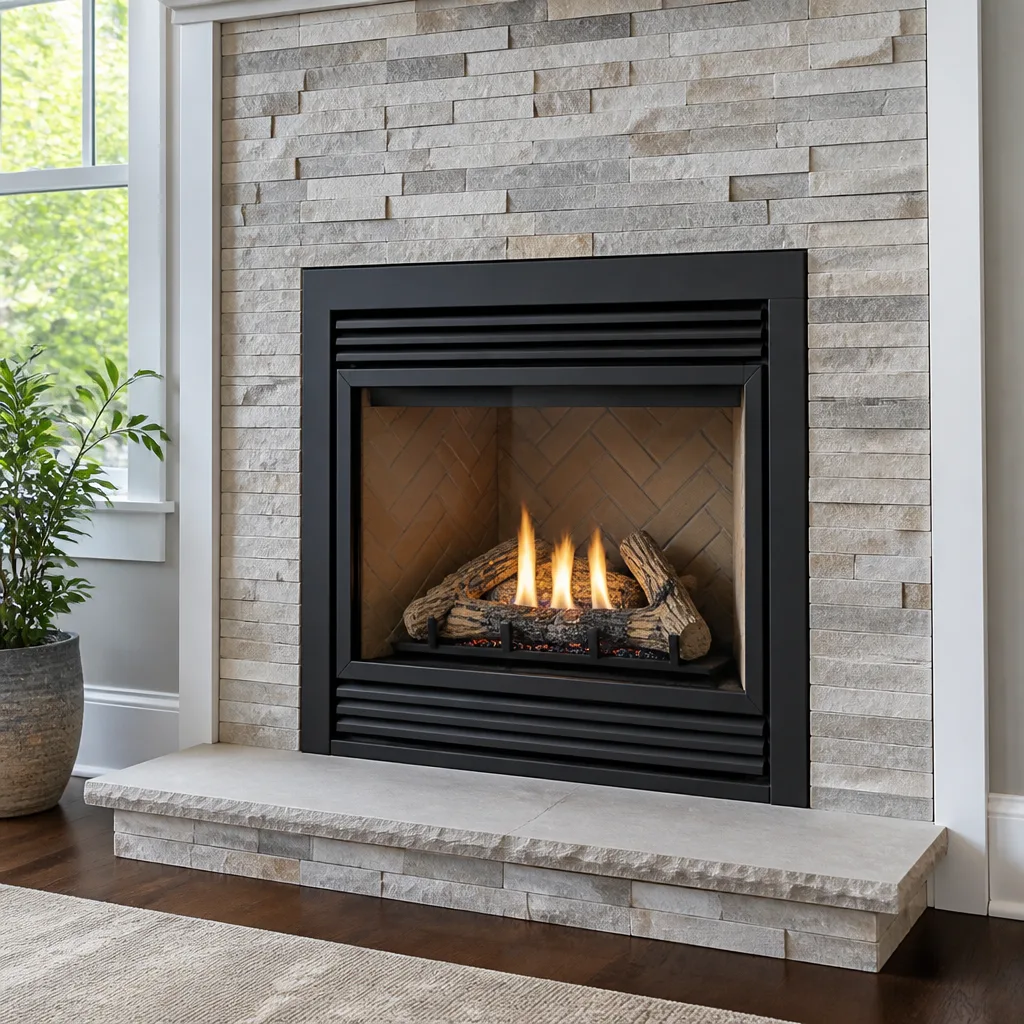 Gas fireplace service
Level 1 sweep and inspection to the NFPA 211 annual standard - flue, crown, cap, and flashing checked and photographed
Chimney sweep logs do not sweep chimneys. They loosen some creosote - which then falls where a brush and vacuum still have to collect it.
Chimney Sweep Maintenance Checklist for Mayfair Homeowners
Most chimney checklists are calendars in disguise: sweep in fall, cap in spring, done. That approach misses the point. A chimney is six separate components stacked into one system, and each one fails on its own schedule. If your sweep can’t tell you the condition of your smoke shelf when they’re done, they may not have looked at it at all. This guide is organized by component, not by season, so you can walk through your own chimney from the firebox floor to the cap crown and verify what was actually checked. You’ll get the items you can inspect yourself, the red flags a surface clean leaves behind, and the freeze-thaw triggers that matter in Mayfair.
Styles & brands we work with
- Sweep & inspection
- Caps & crowns
- Flue relining
- Masonry repair
- Gas fireplace service
Quick Answer
A proper chimney maintenance checklist in Mayfair covers six components: firebox, damper, smoke shelf, flue liner, crown, and cap. Each needs a specific condition check, not just a sweep. Homeowners should visually inspect the firebox, damper movement, cap, and exterior crown between professional visits, and have the flue and smoke chamber cleaned and inspected once a year during active burning seasons. Pennsylvania’s freeze-thaw cycles make spring and early summer the best time to catch cracks before the next heating season.
Table of Contents
- The Six-Component Checklist: Firebox to Crown
- What You Can Inspect Yourself Between Professional Visits
- Red Flags That Signal a Surface Clean Skipped Interior Zones
- How to Document Condition Changes Year Over Year
- Pennsylvania-Specific Maintenance Triggers
- Freeze-Thaw Cycles and Moisture Intrusion
- Why “Full-System” Matters More Than a Deep Sweep
- Common Mistakes to Avoid
The Six-Component Checklist: Firebox to Crown
A chimney is not a pipe. It’s a stack of separate masonry, metal, and refractory parts that meet at joints, and every joint is a place where heat and moisture do their work. When we inspect a chimney in Mayfair, we work through the same six zones every time, in the same order, from the bottom up. You can use this sequence to check what your own sweep covered. If the report doesn’t mention one of these zones, ask why.
- Firebox. The firebox takes the highest heat of any part of the chimney. Look for cracked firebrick, crumbling mortar joints, and white chalky staining that signals moisture. These are signs the firebox is no longer containing heat the way it should be.
- Damper. The damper should open and close fully and sit flush when closed. A damper that sticks, drops out of alignment, or leaves a gap is letting heated room air escape up the flue year-round, not just during burns.
- Smoke shelf. This is the ledge just above the damper, at the base of the smoke chamber. It collects soot and creosote when a sweep only vacuums the firebox floor. Ask your sweep what the smoke shelf looked like.
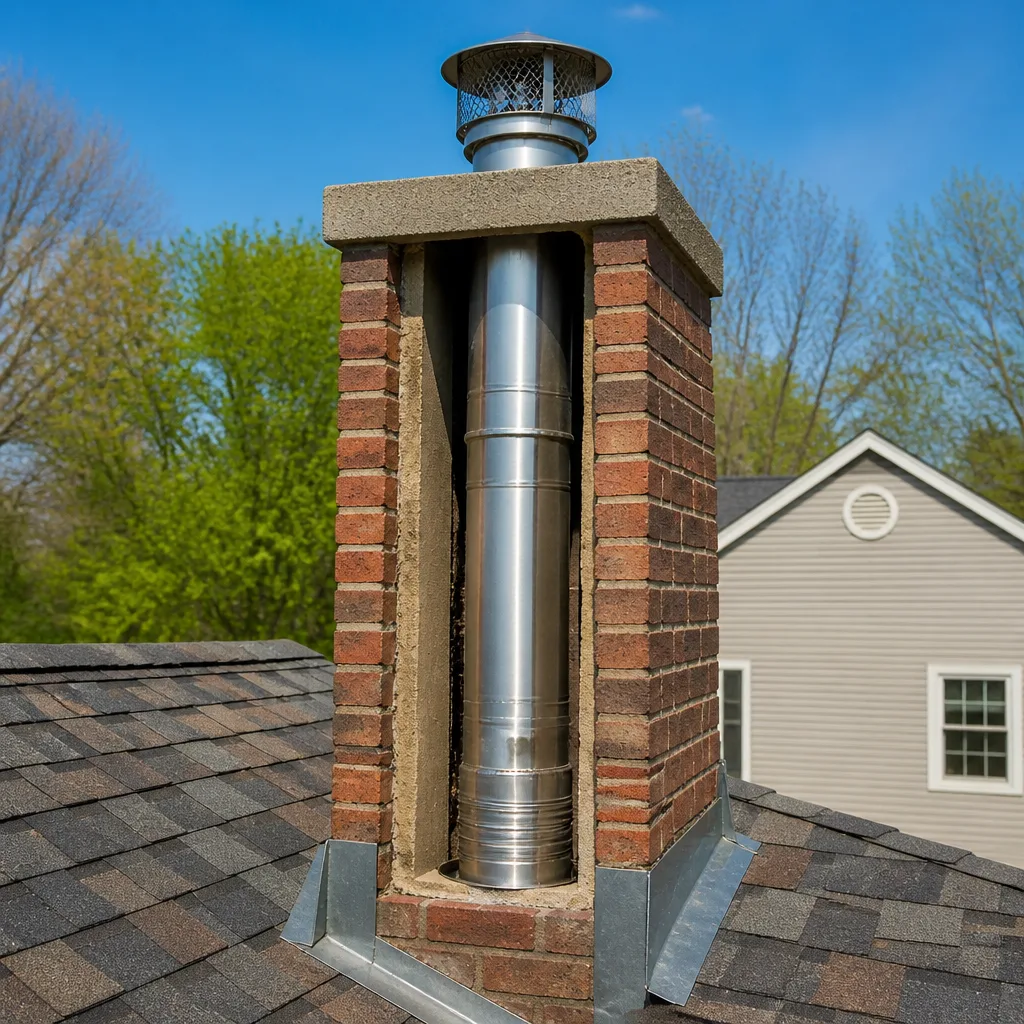
- Flue liner. Whether clay tile or stainless steel, the liner is checked by camera. Cracks, gaps at the joints, and missing mortar between tiles all compromise the liner’s job of keeping combustion gases inside the flue.
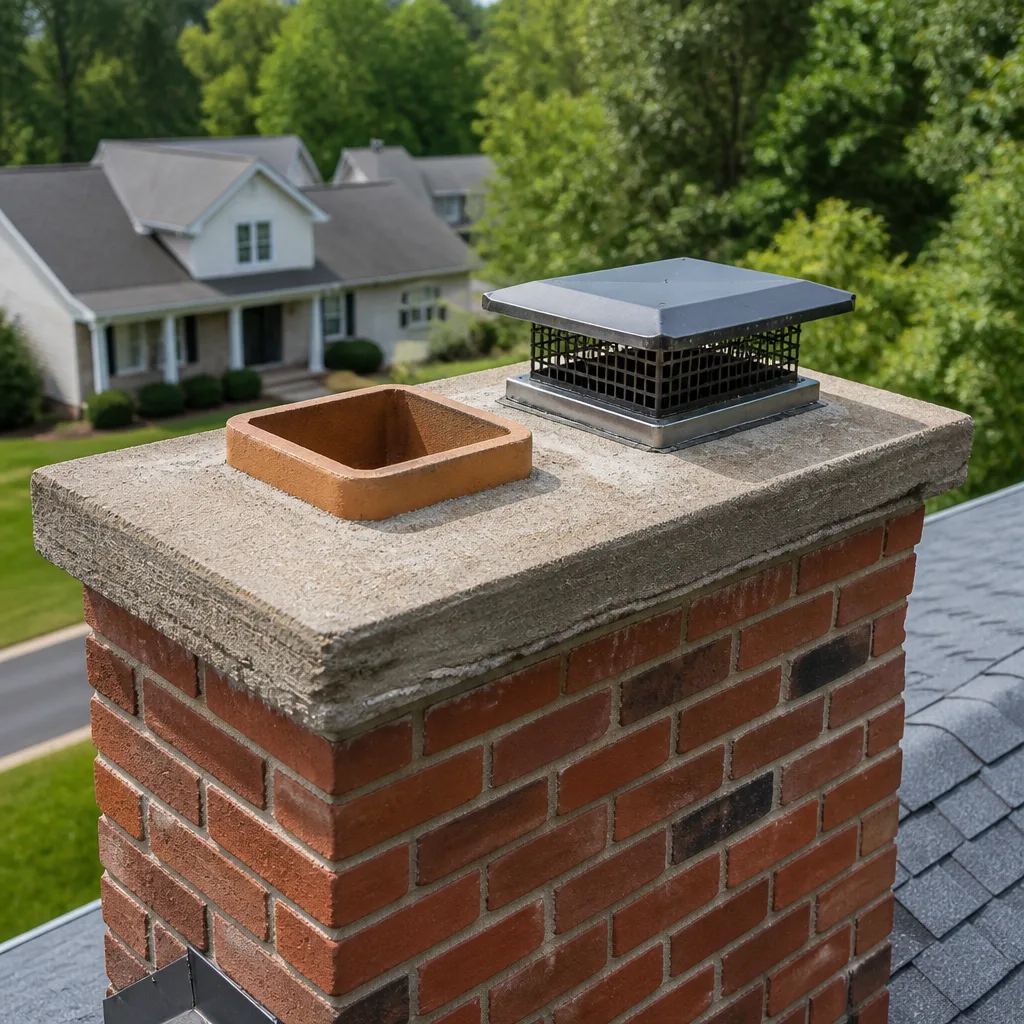
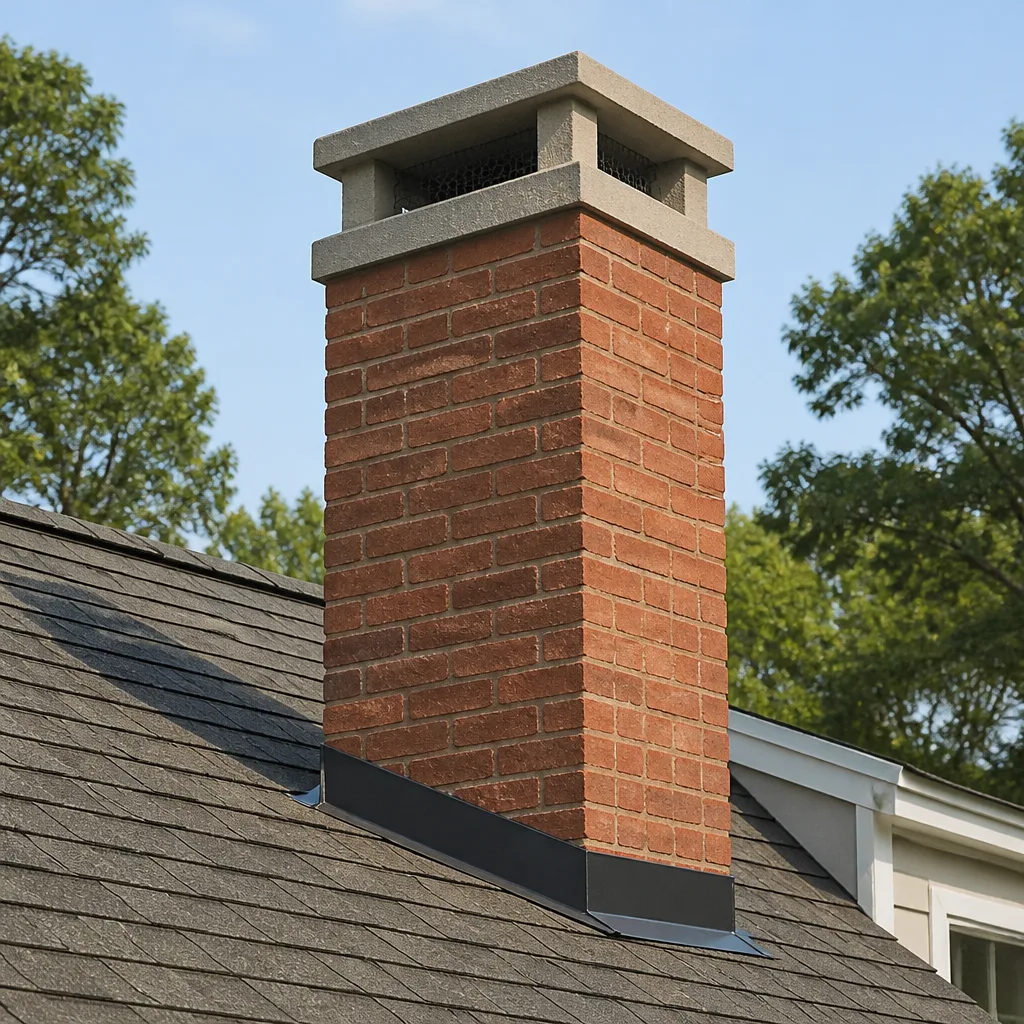
- Crown. The crown is the concrete or masonry cap at the very top of the chimney that sheds water away from the flue opening. Cracks, spalling, and separation from the flue are three separate conditions, each with its own fix.
- Cap. The cap covers the flue opening at the top. It needs to fit correctly to keep water, animals, and downdrafts out, while still allowing gases up. A missing or loose cap is one of the most common causes of moisture problems we find.
Notice that only one of these zones, the flue liner, is what most people picture when they hear “chimney sweep.” The other five are exactly where small problems turn into expensive repairs. A chimney sweep who cleans the flue and stops there has done half the job. The rest of this guide is about the other half.
What You Can Inspect Yourself Between Professional Visits
You don’t need ladders or cameras to catch early warning signs. Several of the most important checks are things any homeowner can do with a flashlight and a mirror, and doing them twice a year gives you a baseline that makes a professional inspection far more useful. Here’s what a homeowner in Mayfair can reasonably inspect themselves between professional visits.
- Firebox interior. Shine a flashlight on the firebrick lining and mortar. Hairline cracks are normal in older brick. Widening gaps, missing mortar, or a firebox floor that has dropped are not. If the brick looks glazed or glassy (called vitrification), it has been over-fired and needs a sweep’s eyes.
- Damper movement. Open and close the damper fully by hand. It should travel smoothly and sit flush against its frame when closed. If you see daylight through the closed damper, or hear metal grinding, that’s a repair item, not a cleaning item.
- Cap and crown from the ground. Stand well back outside and look up at the chimney top. You should see a cap covering the flue and a crown sloping away from the flue on all sides. Missing caps, loose caps, and cracked crowns are visible from the ground in most cases.
- Creosote glaze on the flue walls. Shine a flashlight up the flue from the firebox. You’ll see soot. What you don’t want to see is a shiny, tar-like coating on the walls. That’s glazed creosote, it doesn’t brush off like ordinary soot, and it’s the form most associated with chimney fires.
- Interior staining and drafts. Look for brown water stains on the ceiling or wall near the chimney, and note any cold drafts coming from the fireplace with the damper closed. Both point to moisture or a failed crown or cap, and both are worth flagging to your sweep.
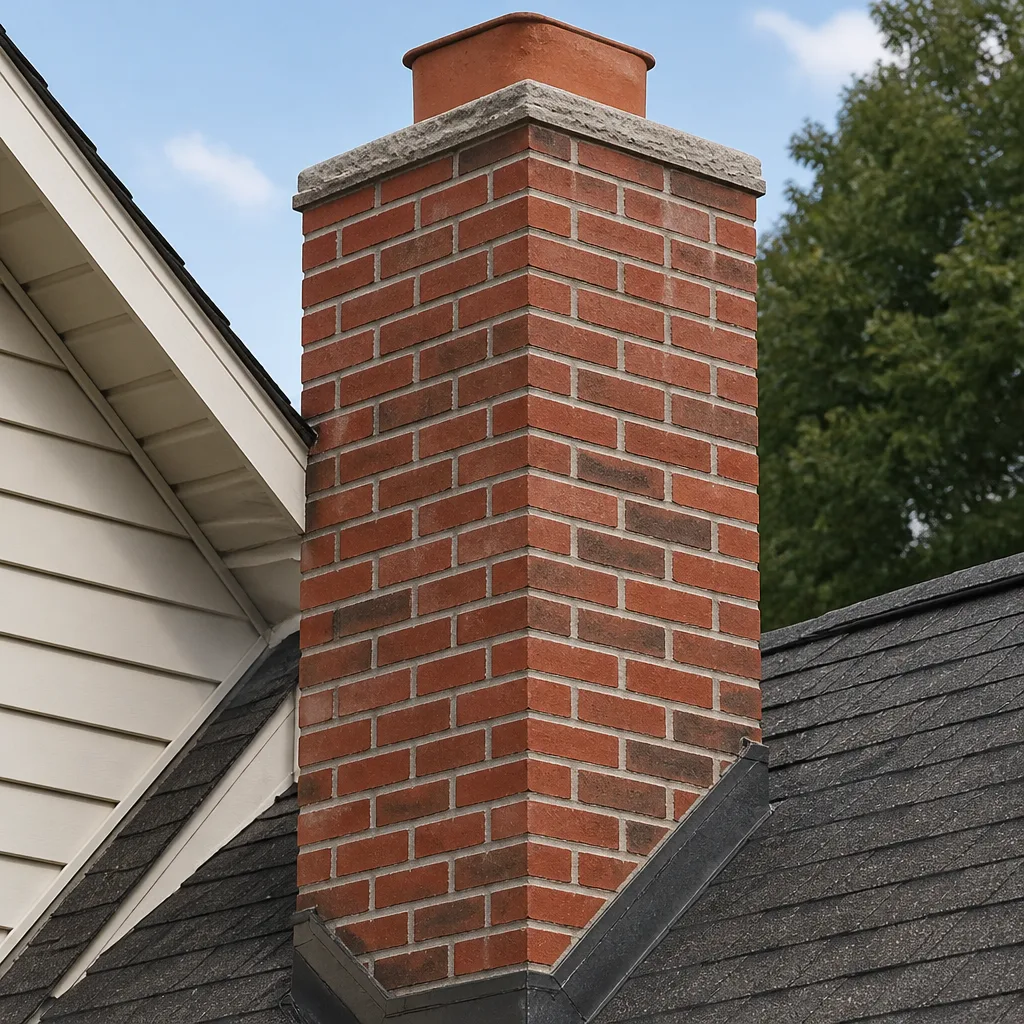
- Exterior masonry joints. From the ground, look for mortar joints on the chimney that are receding, crumbling, or missing. Freeze-thaw damage in this area progresses quietly through the winter and won’t stop on its own.
This is a between-visits checklist, not a replacement for one. The flue liner and smoke chamber can’t be properly checked without a camera, and we don’t recommend homeowners go up on roofs to inspect crowns or caps at close range. The point is to arrive at your professional inspection with observations that sharpen the conversation.
Red Flags That Signal a Surface Clean Skipped Interior Zones
A lot of soot gets removed from fireboxes and flue openings every year, and that’s the easy part. The harder question is what got left behind in the zones that don’t show up in a quick visual scan. These are the red flags we’ve seen on follow-up inspections when a prior “clean” didn’t reach the interior of the system.
- No camera report. If a sweep cleans the flue without a camera inspection, there is no way to know whether the liner has cracks or joint gaps. A sweep who can’t show you the flue from the inside hasn’t verified it. We include camera inspection and a photo report because a picture is the only way to prove a liner is sound.
- No mention of the smoke shelf. The smoke shelf is one of the first spots to hold creosote, and one of the last to get cleaned by anyone who’s rushing. If your report never mentions it, ask specifically.
- Soot falls when you first relight. A telltale sign the smoke chamber wasn’t cleaned down to the damper. Soot that releases on the first burn after a sweep came from above the damper, not the firebox floor.
- Cold drafts persist with damper closed. The damper frame may not have been checked during the sweep, or the cap may not be properly sealing the flue opening. Both are part of a full-system inspection and both are commonly skipped.
- No notes on the crown or cap. If the report only references the flue, the crown and cap weren’t inspected. That’s where most moisture problems begin.
- “It’s fine” with no detail. A one-line summary like “chimney cleaned, all good” is not a condition report. A proper report describes each component’s condition and names anything to watch.
- No photo of the firebox before cleanup. Firebox condition is easiest to judge before soot has been brushed away. A sweep who doesn’t photograph the firebox as found has no baseline for next year.
The pattern behind all of these is the same: a clean-looking firebox and a clean flue opening, with no evidence anyone looked above the damper or at the exterior envelope. A proper chimney sweep produces a report that names each zone and its condition. If it doesn’t, ask for one.
How to Document Condition Changes Year Over Year
Chimneys fail slowly, and the failure is almost invisible unless someone writes it down. Liner deterioration in particular moves gradually, and the difference between last year’s joint and this year’s is a fact you can only see if last year was measured. Here’s how we handle documentation, and how you can keep up your own records between visits.
- Keep a chimney file. A single folder with each year’s inspection report, camera photos, and any repair receipts. Paper or digital, the format doesn’t matter as much as the practice of keeping it in one place. This is the document a buyer will ask for if you eventually sell.
- Note the flue measurement each year. Clay tile liners develop hairline cracks that widen over time. A sweep should record what the tile joints looked like, not just say “inspection passed.” Comparing one year’s photo to the next is how you spot a slow crack before it opens up.
- Date-stamp photos. Whether in your phone or printed, make sure the photos from each inspection carry the year. A photo without a date becomes an anecdote, not a record.
- Note repairs separately from cleaning. If a crown crack was sealed this year, write down the date and what was sealed. Homeowners who skip this step end up re-paying for the same observation on the next inspection.
- Flag the “watch” items. Any component your sweep says is “close to needing work” should go in your file with the exact wording. That phrasing is your trigger to check on it yourself before the next visit.
- Check your file at the start of each burning season. Before your first fire of the year, pull the last report and look at the watch items. If your chimney has gone a full cold season since the last inspection, that’s a reason to book, not a reason to wait.
In our experience, homeowners who keep a chimney file never get talked into work they don’t need, and they never delay work they do need, because they can see the trend for themselves. The camera report and photo documentation we provide are built to feed straight into that file.
Pennsylvania-Specific Maintenance Triggers
Scheduling chimney maintenance in Pennsylvania is not a national calendar question. The region’s climate and burning season give a Mayfair chimney a specific rhythm of use and stress that doesn’t match a fireplace in a mild-winter state or a dry desert climate. Knowing the triggers helps you plan around them instead of reacting to them.
- The burning season concentrates soot deposits. Homeowners in Mayfair use the fireplace heavily through the fall and winter, and often burn several cords of wood per season. Every burning hour deposits soot, and the flue doesn’t get a chance to dry out between fires in December and January. That concentration is the reason an annual sweep during active use is not an optional item.
- The end of the burning season is inspection season. Once the fireplace goes cold for the year, that’s when accumulated soot and creosote can still do damage, and it’s the right time to remove them. It’s also when repairs made now get a full drying season before the next fall use.
- Spring and early summer repairs. Masonry repairs, crown resurfacing, and cap replacement are best done in mild, dry weather. A crack that’s sealed before the first hard freeze won’t have water sitting inside it all winter.
- Fall weather change-over. The first sustained cold snap of the season is a natural inspection reminder, particularly if the chimney hasn’t been checked since the previous winter. Small problems that appeared during the summer heat (cracked crown, loose cap) will announce themselves as drafts or leaks the first time the fire’s lit.
- Local wood fuel matters. Hardwoods like oak and maple are common in the Mayfair area and burn cleaner than softwoods. Whatever you burn, seasoned wood is the goal. Wet wood produces more creosote, and more creosote means more frequent sweeping, not less.
None of these triggers requires guesswork. A Mayfair chimney that sees regular winter use needs an inspection once per burning season, and a spring follow-up if any component showed early damage. That’s it.
Freeze-Thaw Cycles and Moisture Intrusion
Pennsylvania’s climate swings above and below freezing repeatedly through a typical winter, and that cycle is the single most damaging force on a masonry chimney. Water gets into a hairline crack during a warm afternoon, freezes overnight, expands, and widens the crack. It repeats all winter. By spring, a crown crack that started as a hairline can be a visible split, and the mortar in the exterior masonry can be pitted or missing. We see this pattern consistently in Mayfair whenever we’re inspecting chimneys in spring.
The chimney components most exposed to this pattern are the crown, the exterior masonry joints, and the cap. If any of the three has lost its water-shedding ability, water moves inside the chimney structure. From there, it does exactly three things: it stains interior ceilings near the chimney, it feeds rust on a stainless steel liner, and it freezes inside clay tile joints, widening them.
That last one is the expensive path. A failed lin
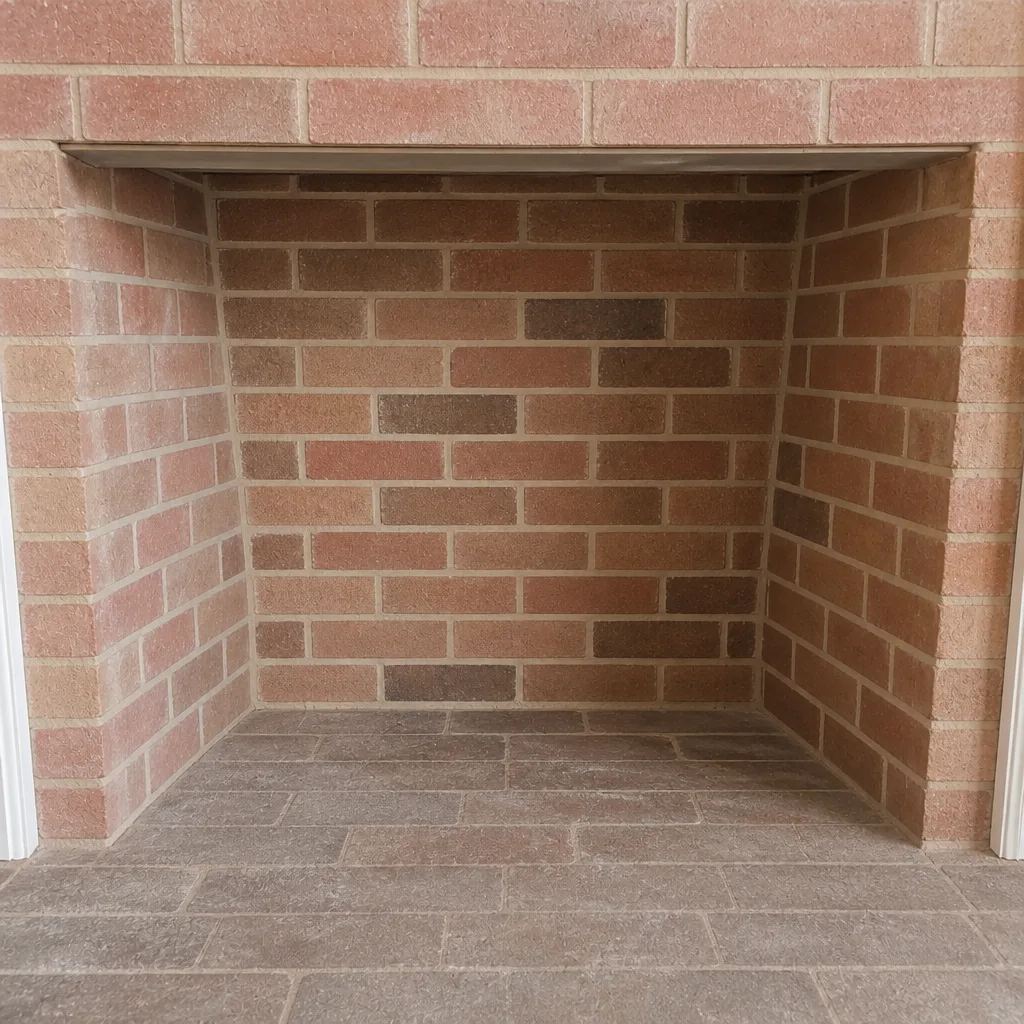
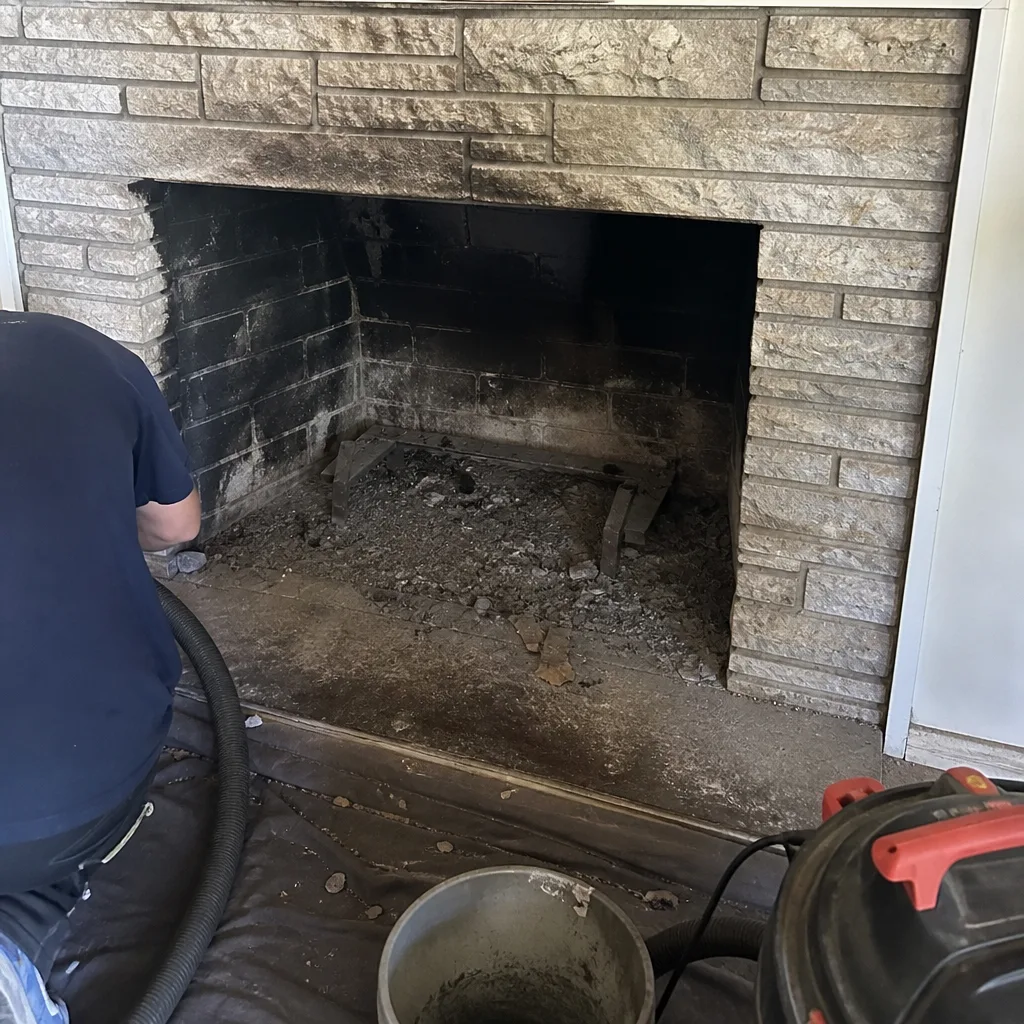
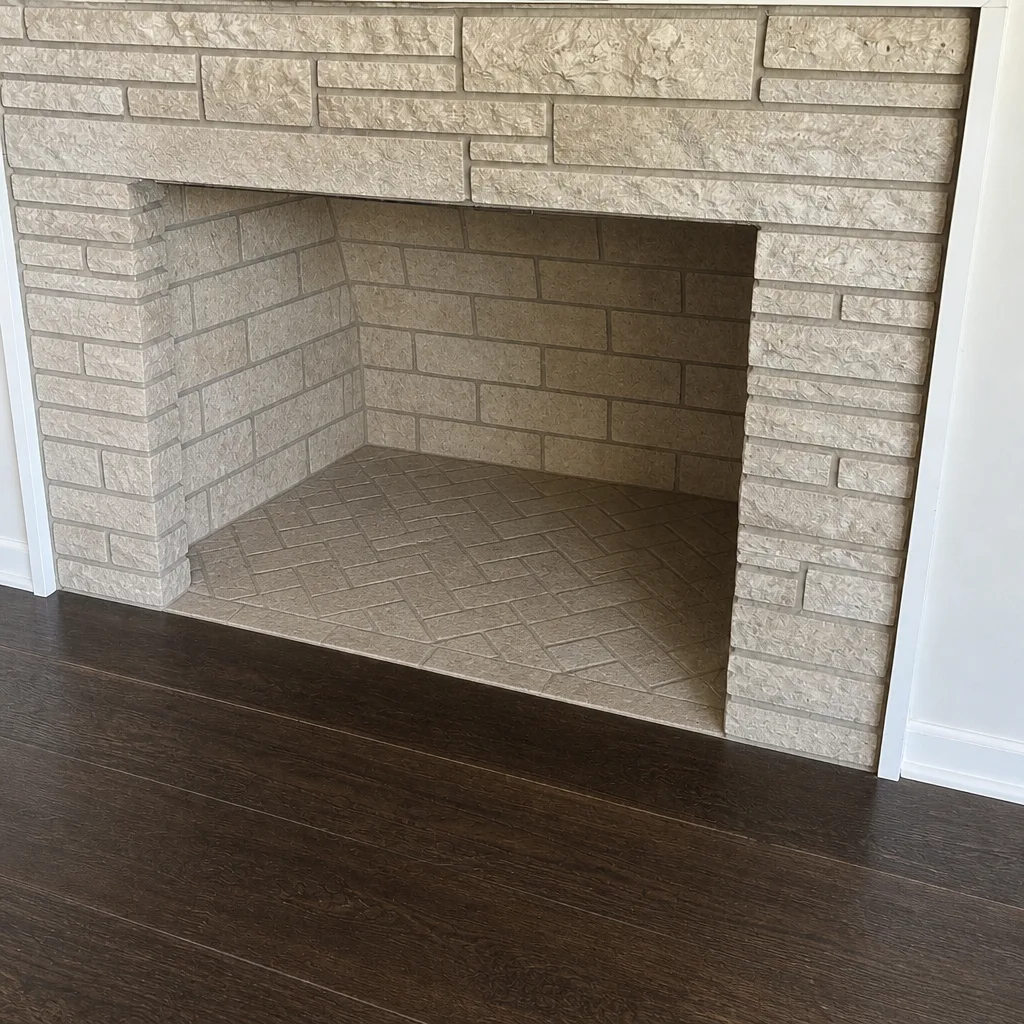
See the difference
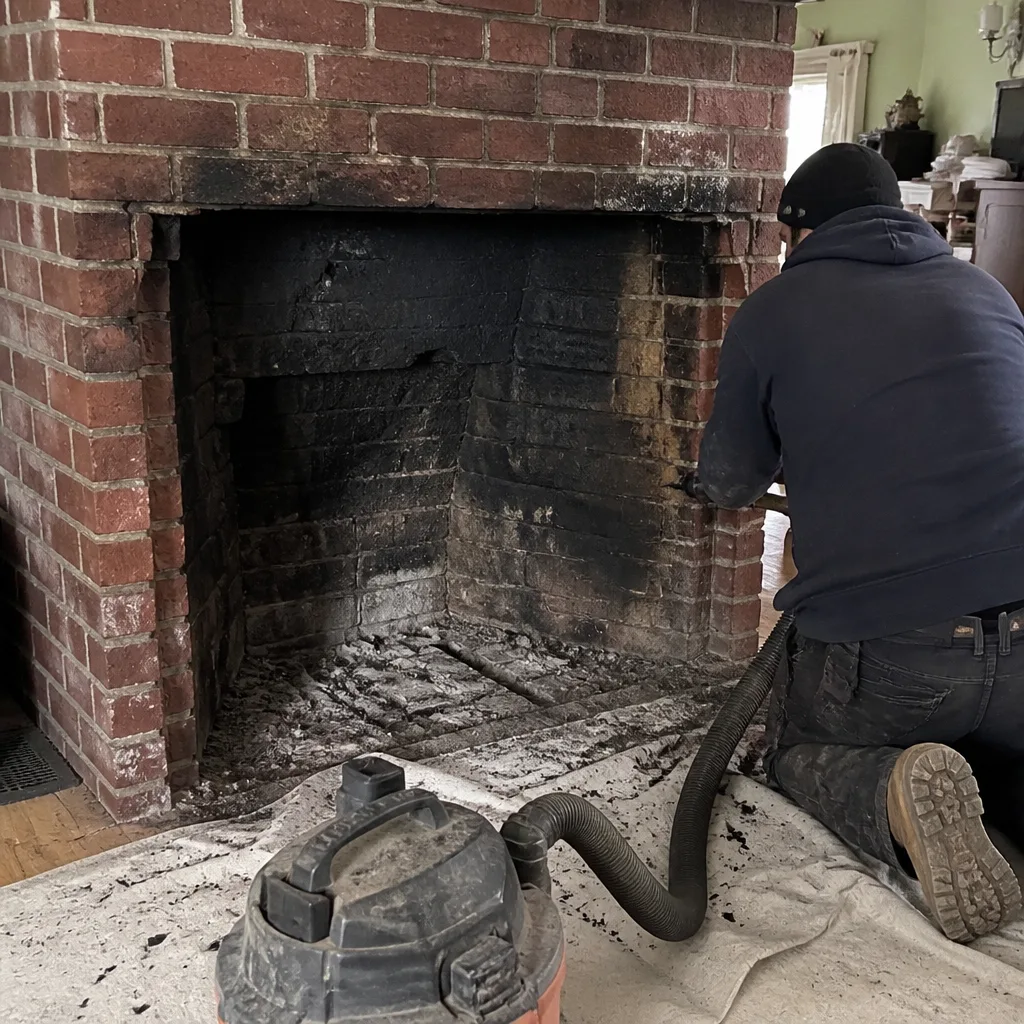 Before
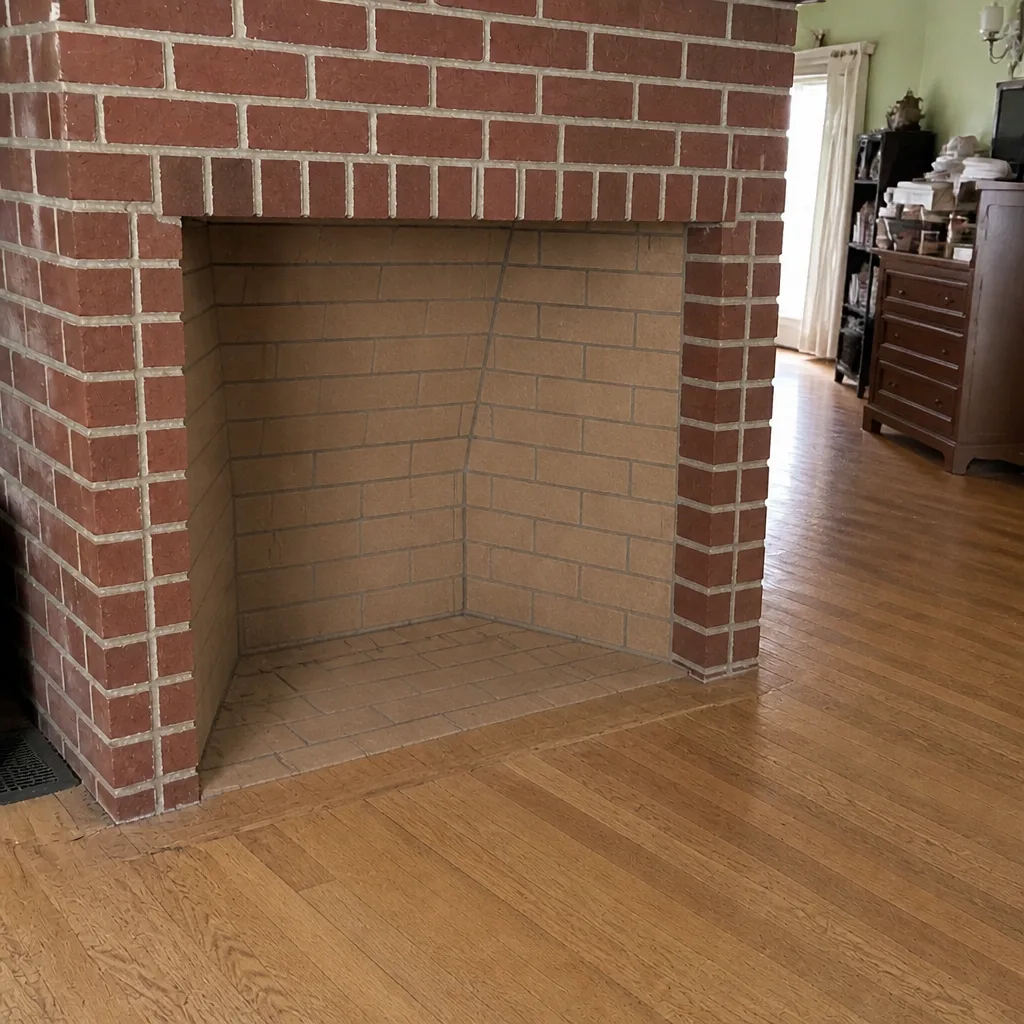 After
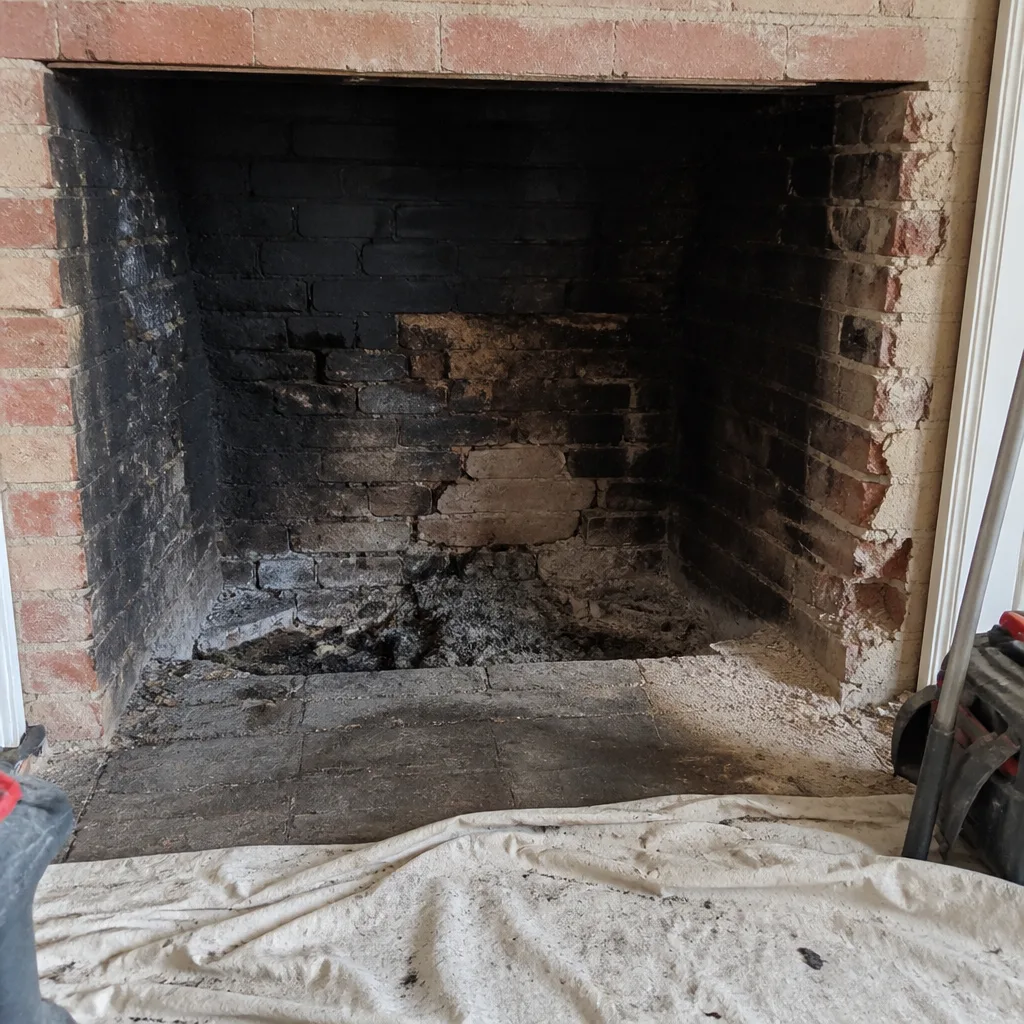 Before
 After
 Before
 After