
Last updated November 22, 2026
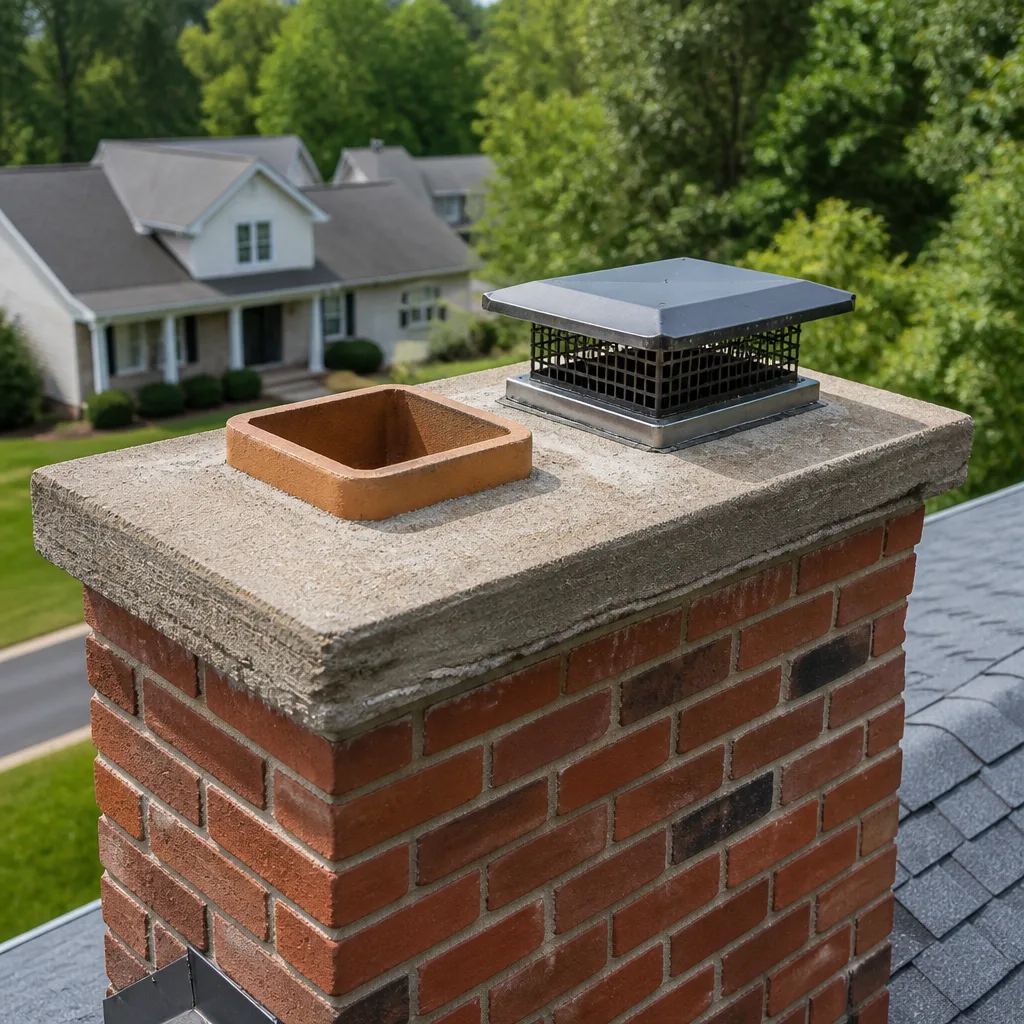 Sweep & inspection
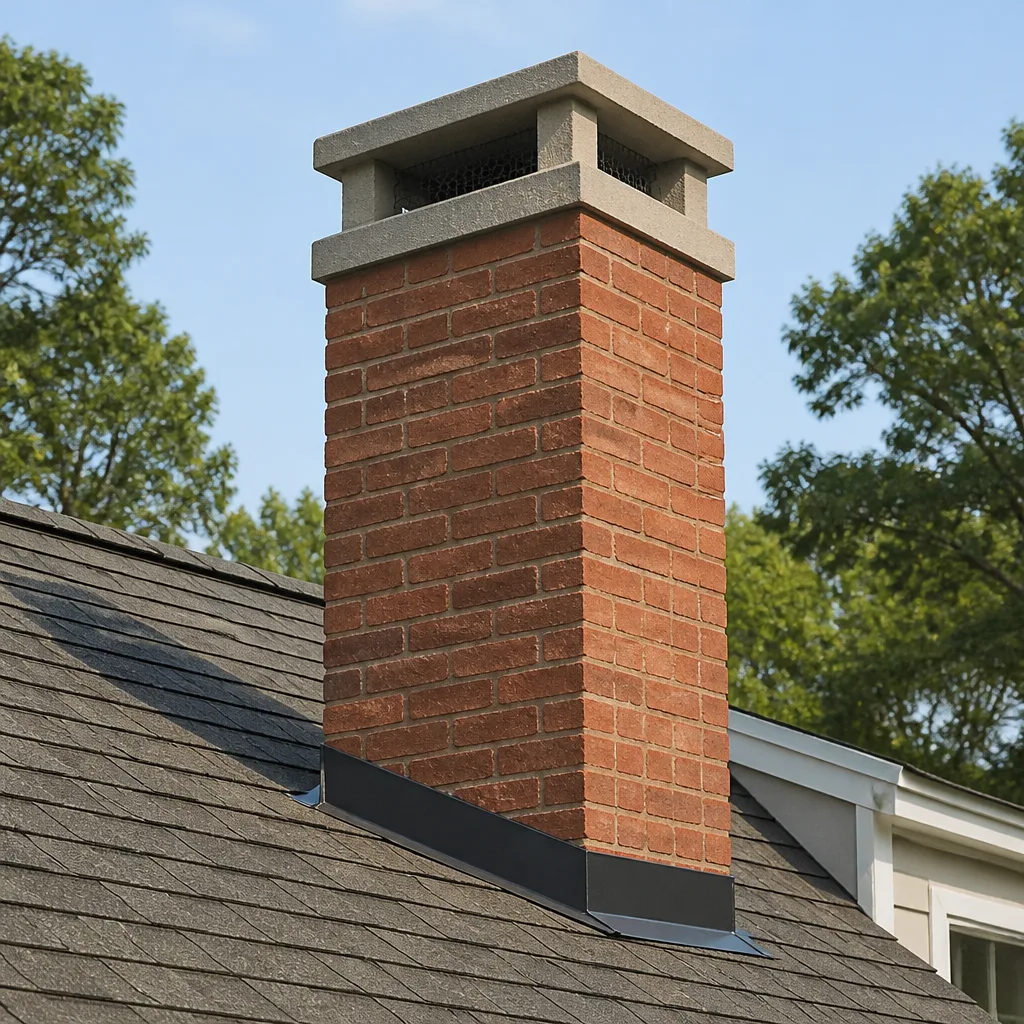 Caps & crowns
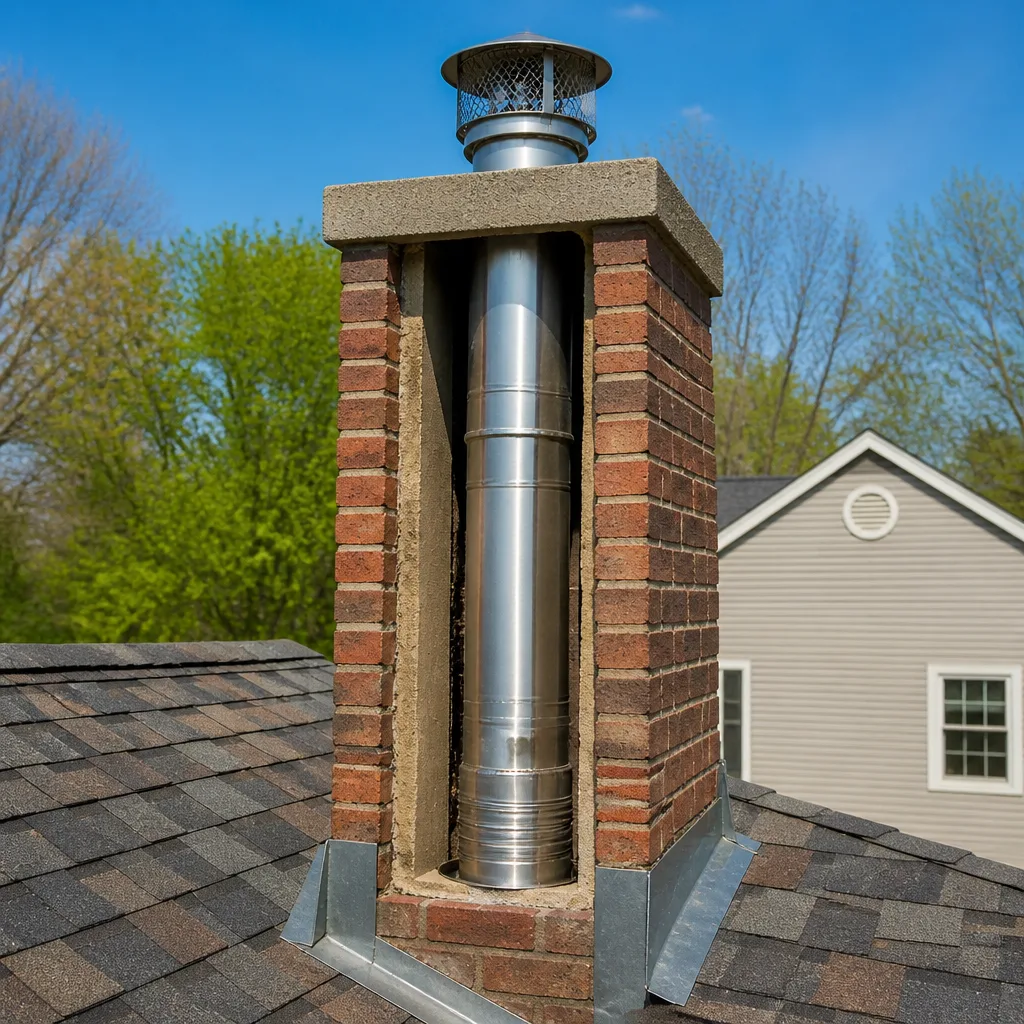 Flue relining
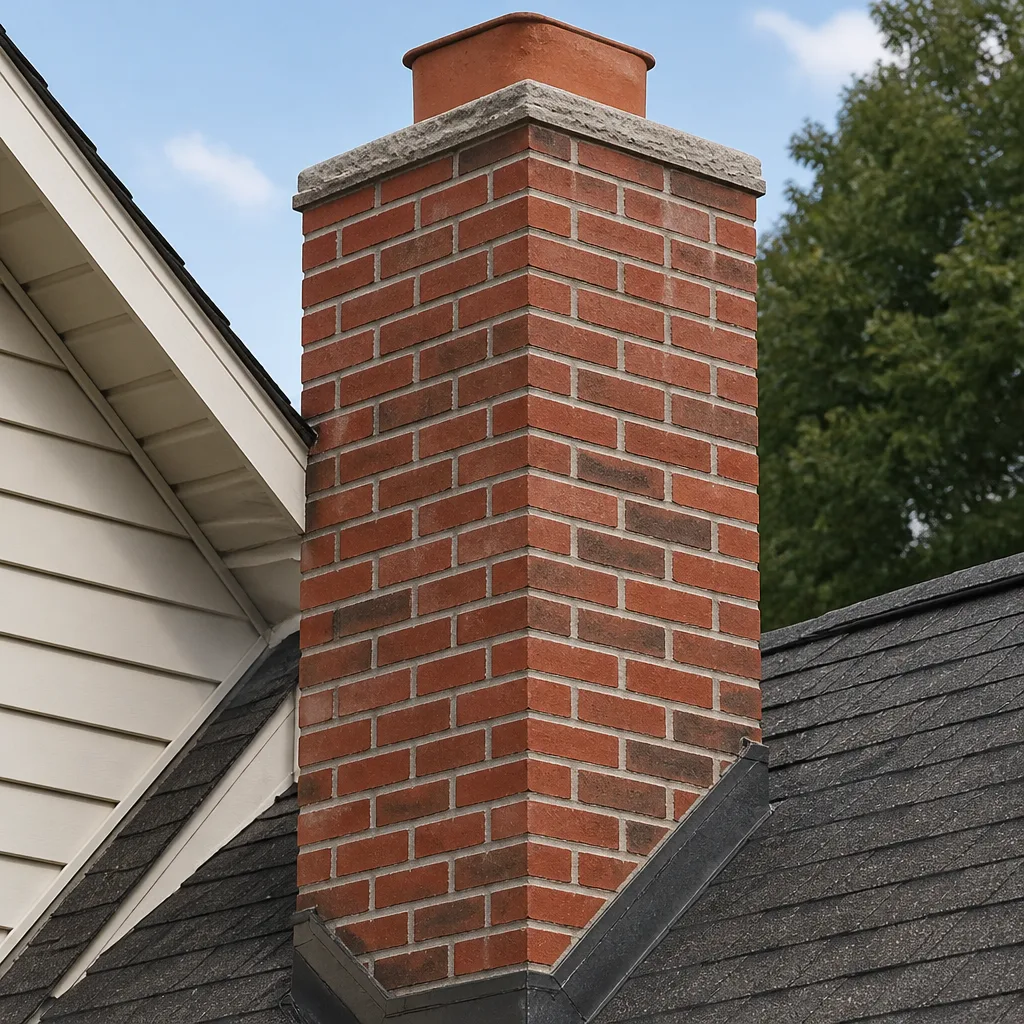 Masonry repair
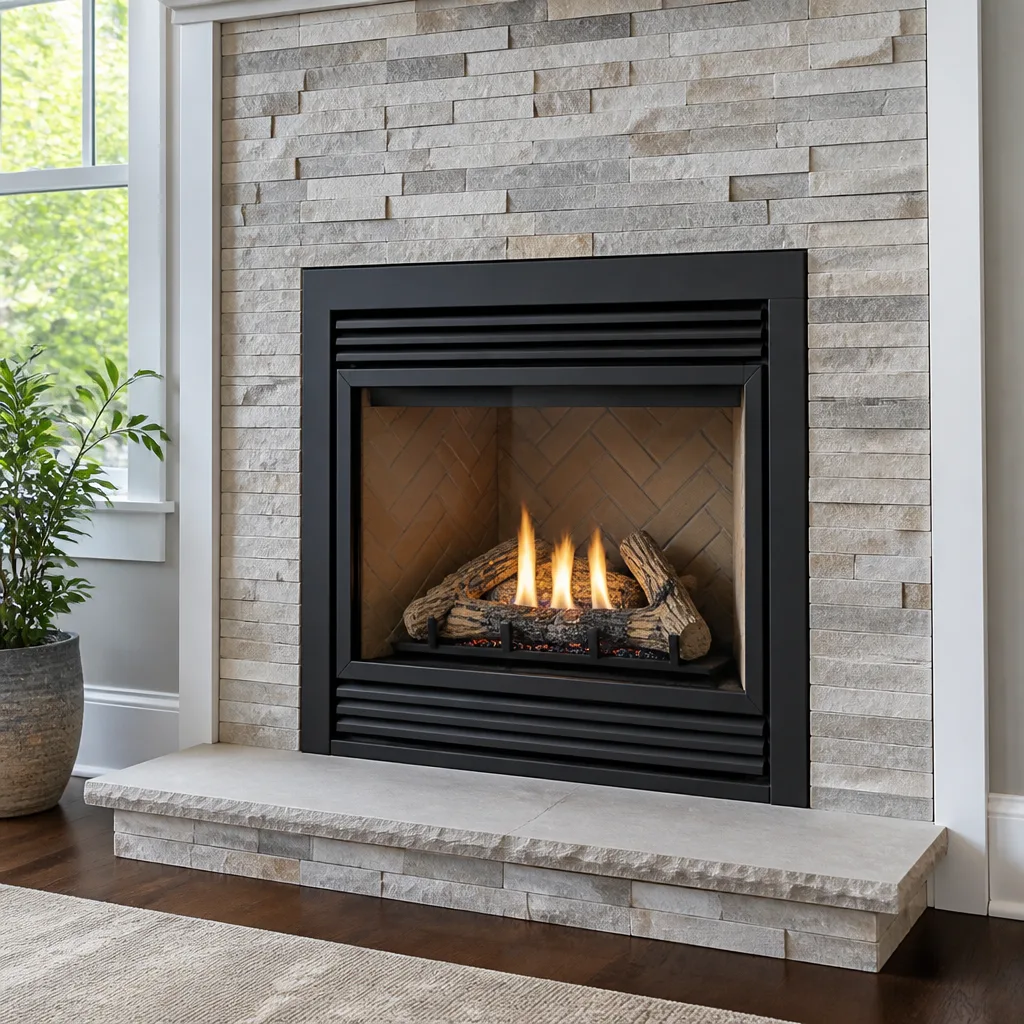 Gas fireplace service
Level 1 sweep and inspection to the NFPA 211 annual standard - flue, crown, cap, and flashing checked and photographed
Chimney sweep logs do not sweep chimneys. They loosen some creosote - which then falls where a brush and vacuum still have to collect it.
DIY vs Professional Chimney Cleaning: The Mayfair Homeowner’s Decision Guide
You can buy the same poly brushes a sweep uses, the same weighted pull rings, the same creosote scrapers. None of that is a secret. But you can’t buy the ability to look up a flue and correctly tell second-degree creosote glaze from ordinary soot, and that distinction is the one that separates a swept chimney from a chimney fire waiting for its first cold night. This guide is about that gap. It covers what DIY chimney cleaning in Mayfair actually requires, which deposits make the job dangerous rather than merely difficult, and where the line sits between what a homeowner can reasonably maintain and what a trained specialist should diagnose. We’ll walk through the tool list, the creosote stages, the access problems Mayfair’s older homes create, and the insurance side nobody mentions until something goes wrong.
Quick Answer
A homeowner can reasonably handle surface maintenance: checking the cap, testing the damper, clearing firebox ash and debris. Genuine flue cleaning, and any assessment of creosote condition or liner integrity, belongs with a professional. The reason isn’t that you’re incapable – it’s that self-cleaning removes the evidence a trained eye needs to spot a failing liner or a glaze that brushing alone won’t shift. In Mayfair’s older masonry chimneys, that distinction matters more than in a modern prefabricated system.
Styles & brands we work with
- Sweep & inspection
- Caps & crowns
- Flue relining
- Masonry repair
- Gas fireplace service
Table of Contents
- What DIY Chimney Cleaning Actually Requires
- Creosote Stages: Where DIY Stops Being Safe
- What You Can Legitimately Maintain Yourself
- How Mayfair Row Houses Change the Access Equation
- What a Professional Cleaning Covers That DIY Doesn’t
- Liability and Insurance When You Self-Certify
- Common Mistakes to Avoid
- When to Call a Professional
What DIY Chimney Cleaning Actually Requires
The simplified version you’ll find online is a brush, a rod, and a shop vacuum. The real version is more involved, and the gap between the two is where most ambitious DIY attempts stall out halfway up a flue.
Here’s what a proper cleaning session demands, in full:
- A correctly sized brush matched to your flue. Round flue, round brush; the brush must match the flue’s diameter within a tight tolerance. An oversized brush jams; an undersized one skims the surface and leaves the deposits that matter.
- Rigid or semi-rigid rods. Cheap screw-together fiberglass flexes and scatters at the bend. You need rods stiff enough to carry pressure to the flue walls without whipping around.
- Respiratory protection rated for fine particulates. Creosote and soot dust is the kind of material you don’t want in your lungs. A dust mask from the hardware aisle isn’t the same as a fitted respirator.
- Sealed drop cloths and plastic sheeting. Every cleaning dislodges soot, and in a Mayfair home with the firebox in a living room, containment is most of the job.
- Safety glasses, gloves, and a headlamp. You need light up the flue to see what you’re doing, and protection from falling debris.
- Roof access equipment. If you’re cleaning top-down, that means a stable ladder setup, roof boots or a harness, and a second person on the ground. That’s before you consider the pitch of the roof.
- A vacuum that handles fine ash. A household shop vac clogs its filter quickly and blows soot back into the room. Proper chimney vacuums use HEPA filtration and are built for this.
Assembled honestly, the kit costs more than a single professional cleaning, and most of it sits in a garage afterward. That’s not an argument against DIY as a principle. It’s just the reality of what a real job involves versus the version that gets simplified for a search result.
Creosote Stages: Where DIY Stops Being Safe
Creosote isn’t one substance. It exists in three recognizable stages, and the stage dictates whether a homeowner can address it or whether a specialist needs to step in. This is the part of the debate that rarely gets covered because it can’t be reduced to a checklist.
Here’s how the stages progress:
- First-degree creosote. Flaky, soot-like, easily brushed away. This is what accumulates after a season of normal, well-seasoned burning. A properly sized brush removes most of it. Homeowners who understand firewood moisture and burn clean usually see only this.
- Second-degree creosote. A crusty, hardened deposit that clings to the flue wall. A brush can break some of it loose, but it takes pressure and repeated passes, and the residue left behind matters. This is where DIY cleaning starts to feel like work you might not finish correctly.
- Third-degree creosote. A glazed, tar-like coating fused to the liner. It looks almost like black glass. Brushing doesn’t remove it. It has to be chemically treated or physically scraped with the right tools, and it’s the deposit most closely linked to chimney fires because it ignites readily at high flue temperatures.
The dangerous divide is between second and third degree. A homeowner can look up a flue and see that something is wrong. Recognizing whether that something is a stubborn second-degree crust or a glaze that demands a professional’s tools is a different skill entirely. If you can’t tell, you can’t judge whether your cleaning worked, and a flue that looks clean from below might still carry a glaze higher up.
Liner condition compounds the risk. Older Mayfair masonry chimneys sometimes carry unlined flues or clay tile liners with cracked joints. Brushing a compromised clay liner with too much force can crack a tile that was already brittle. And a DIY scrub that dislodges a chunk of glaze onto an already-damaged liner joint leaves you with a worse problem than you started with.
This is why we can’t just hand you the brush and say go to it. What lives inside a flue requires judgment as much as effort. Our technicians have up to 9 years of experience reading exactly this, and it’s the reason a professional cleaning follows up with a camera inspection and a photo report you can see for yourself.
What You Can Legitimately Maintain Yourself
DIY has a real role, and it’s not cleaning the flue. It’s the maintenance that prevents problems from becoming serious and that keeps you informed about your chimney between professional visits. Here’s what a homeowner can and should handle.
Check the chimney cap
Get on the roof or look from the ground with binoculars and confirm the cap is intact. A missing or damaged cap lets water, birds, and debris into the flue. If you spot one that’s cracked, rusted through, or missing, that’s a call, not a fix. We specify Gelco and Famco caps because the fit and weather performance hold up, and a properly sized cap does more for a chimney’s lifespan than almost any other single component.
Test the damper
Open and close the damper before every fire. It should move freely and seat fully. A damper that sticks, won’t open completely, or won’t close is a real problem worth a professional look. Get familiar with how yours feels when it’s operating correctly.
Clear firebox ash and debris
Scoop out excess ash between fires. Keep the firebox clean and free of paper, trash, or anything that shouldn’t be burned. Check the firebox walls for cracks or loose mortar while you’re at it. If you see spalling brick or crumbling joints, note it and mention it at the next sweep. Damage at the firebox level is often the earliest sign that something deeper needs attention.
Watch your firewood
Seasoned, dry wood produces less creosote than green or wet wood. This is the single biggest lever a homeowner controls over how fast deposits build up. Stack wood where it can dry, keep it well clear of the house, and don’t burn anything that hasn’t dried properly.
Notice what you notice
Pay attention to draft, smell, and smoke. A chimney that drafts poorly, smells strongly in warm weather, or smokes back into the room is telling you something. Note the conditions and act on it. Observation is free, and it’s the most useful thing you can do between cleanings.
How Mayfair Row Houses Change the Access Equation
Standard DIY guidance quietly assumes a detached house with a simple roof, a straight flue, and space to set a ladder. Mayfair is largely row house and older masonry territory, and that changes the math in ways the online guides don’t account for.
Row houses share walls. There’s no clear run to the side of your chimney on a shared structure, and ladder placement on a narrow roofline is a genuine safety problem, not a nuisance. Where the roofline abuts a neighboring property, setting up stable top-down access requires equipment and a technique that’s outside what a homeowner should attempt. The height, pitch, and access all converge to make roof access the wrong place to save money.
Older masonry chimneys also tend to carry their own quirks: offset flues that bend inside the wall, which defeats a straight brush rod; undersized or irregular flues that need a brush matched precisely; and clay tile liners that have spent decades expanding and contracting. An offset flue is nearly impossible to clean from below with consumer equipment, and cleaning from the top requires the angle and tools a professional carries. A common Mayfair chimney configuration involves more than one flue in a single stack, and each flue needs its own cleaning and inspection. That structure is exactly why we treat the whole envelope – flue, firebox, crown, cap, chase cover – as one system rather than a single sweep.
This is also where the full-system approach earns its keep. If we’re cleaning an offset flue and find a cracked crown or failing cap in the same visit, we can address it with the same contractor. No coordinating a roofer, a mason, and a sweep. For a detailed look at what that scope covers, our chimney repair service handles structural work that a cleaning alone won’t solve.
What a Professional Cleaning Covers That DIY Doesn’t
Here’s the honest accounting of what you get from a professional visit that a brush and a Saturday don’t deliver.
- Camera inspection of the flue. A camera run confirms whether the liner is intact, whether joints are sealed, and whether any creosote remains in the upper sections. This is the difference between knowing and hoping.
- A photo report. You see exactly what we see. If we recommend work, the evidence sits on the report. Nothing is recommended without camera evidence, and we say plainly when work can safely wait.
- Correct creosote treatment. Second and third-degree deposits need the right tools or chemical treatment, not brute force. Getting this wrong damages a liner faster than leaving the glaze alone.
- Flue sizing confirmation. A flue the wrong size for its appliance drafts poorly and builds creosote faster. This only shows up in a professional inspection.
- Restoration capability when needed. If the firebox is deteriorating or liner joints are failing, HeatShield can resurface and seal those surfaces in qualifying systems without a full liner replacement. We work with DuraFlex flexible stainless steel for relining when the existing liner is beyond repair, and we source through Chimney Sweep Mayfair‘s professional supply relationships with Olympia Chimney and Copperfield rather than big-box substitutes.
- A flat-price sweep agreed before booking. The price is set before anyone arrives.
If you want the broader picture of what a scheduled chimney sweep involves step by step, that’s covered separately. The point here is that the tool list and the diagnostics are two different things, and the diagnostics are where the value sits.
Liability and Insurance When You Self-Certify
This is the section no DIY guide covers, and it’s the one most likely to matter in the worst case.
When you hire a professional sweep, you get a record: a report that documents the condition of the flue at a point in time. When you sweep your own chimney, you have no such record. If a chimney fire or a carbon monoxide incident occurs and your insurer asks for documentation of maintenance, a homeowner’s memory of “I cleaned it last fall” carries little weight.
Most homeowner policies have language about reasonable maintenance. We aren’t your insurer, and we aren’t giving legal advice, but the general pattern is that failure to maintain a chimney can complicate a claim. A documented professional cleaning is evidence that maintenance happened. A self-cleaned flue that fails is a claim an adjuster will scrutinize.
The bigger issue is what self-cleaning obscures. A professional sweep might catch the cracked liner or deteriorated firebox that a homeowner wouldn’t have recognized. That early catch is often the whole point of the visit. The chimney cap & crown work we do is one example of damage that’s visible from the roof and easy to miss from the ground.
Self-certifying a chimney as clean is a different act than sweeping it. You’re putting your name to a judgment about a system you haven’t been trained to assess. That’s the liability in one sentence.
Common Mistakes to Avoid
- Using an oversized brush to force deposits loose. A brush wedged hard into a flue can crack a clay tile or damage a liner joint. The right fit does the work; force causes the damage.
- Cleaning top-down without fall protection on a Mayfair roof. Sloped roofs, shared structures, and uncertain footing make the roof the most dangerous part of the job. Roof access is not worth improvising, and a chimney that needs cleaning is not worth a fall.
- Assuming a clean-looking flue is a clean flue. You can’t see the upper sections from the firebox, and the glaze that matters most is exactly what you can’t easily reach. A flashlight from below doesn’t tell you what a camera run would.
- Burning green or unseasoned wood because it’s available. Wet wood deposits far more creosote than dry. The cost of proper seasoning is time; the cost of skipping it is glazed flue walls.
- Ignoring a draft or odor problem because the chimney “works.” A draft that feels off or a smell that worsens in warm weather often points to a blocked flue or a liner issue. A working fire doesn’t mean a clean chimney.
- Cleaning without inspecting. Sweeping is half the job. Confirming that the liner is intact, the crown is sound, and nothing is cracked or spalling is the other half, and it’s the half most DIY attempts skip.
- Treating a self-sweep as a substitute for documentation. If a fire or CO incident occurs and you need to show a maintenance record, a memory won’t stand in for a report.
When to Call a Professional
Some situations leave no room for DIY, and they’re worth naming plainly. If you see glazed, tar-like creosote in the flue, stop brushing and call. If your chimney has no cap, a damaged crown, or visible cracks in the masonry, that’s a call. If you notice smoke backing into the room, a persistent creosote smell, or a damper that won’t operate, don’t wait. And if it’s been more than a season since the last professional cleaning, book it before the burning season starts, not during a problem.
Mayfair’s row houses and older masonry chimneys make roof access and offset flue cleaning a genuine safety concern, not just an inconvenience. That’s where a specialist earns their keep. Chimney Sweep Mayfair offers free estimates in Mayfair. Call (888) 841-6695. We answer 24/7. Fast dispatch from 7am to 7pm, Sunday through Friday.
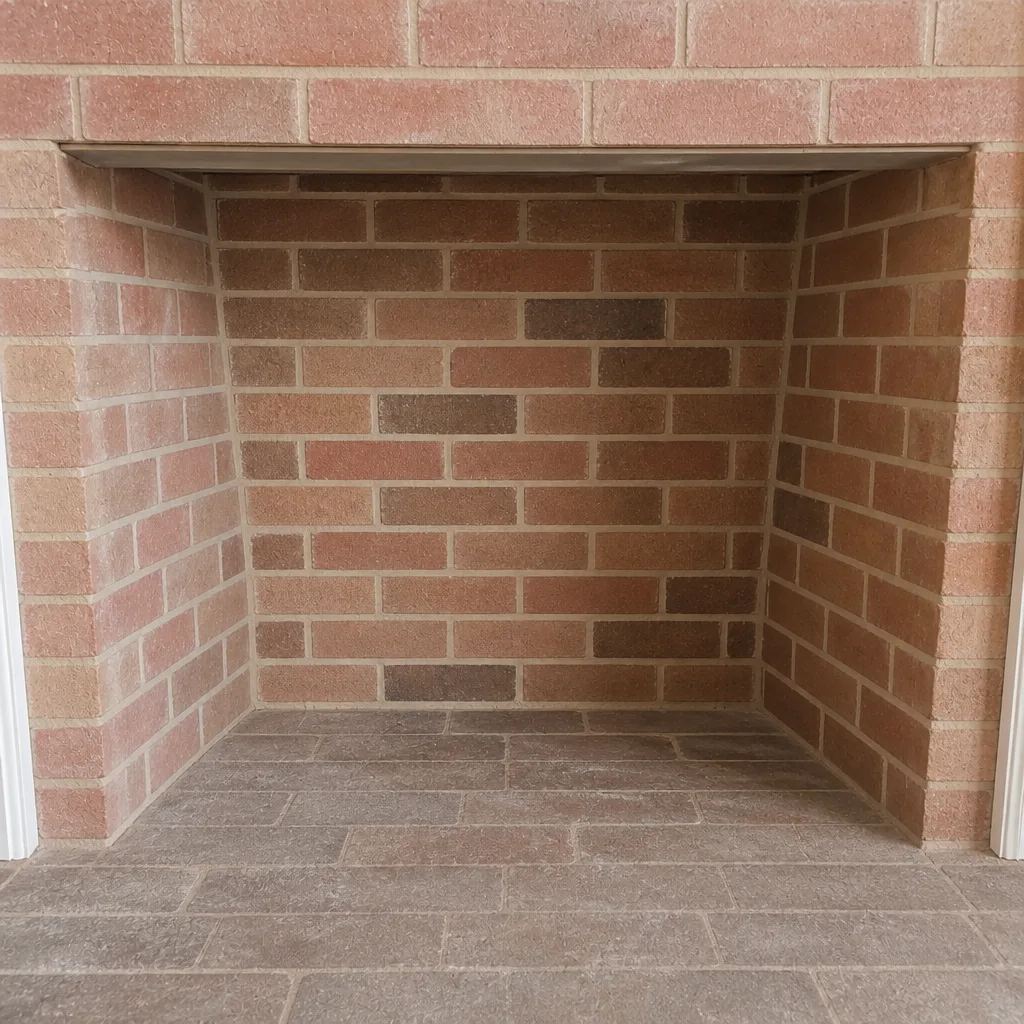
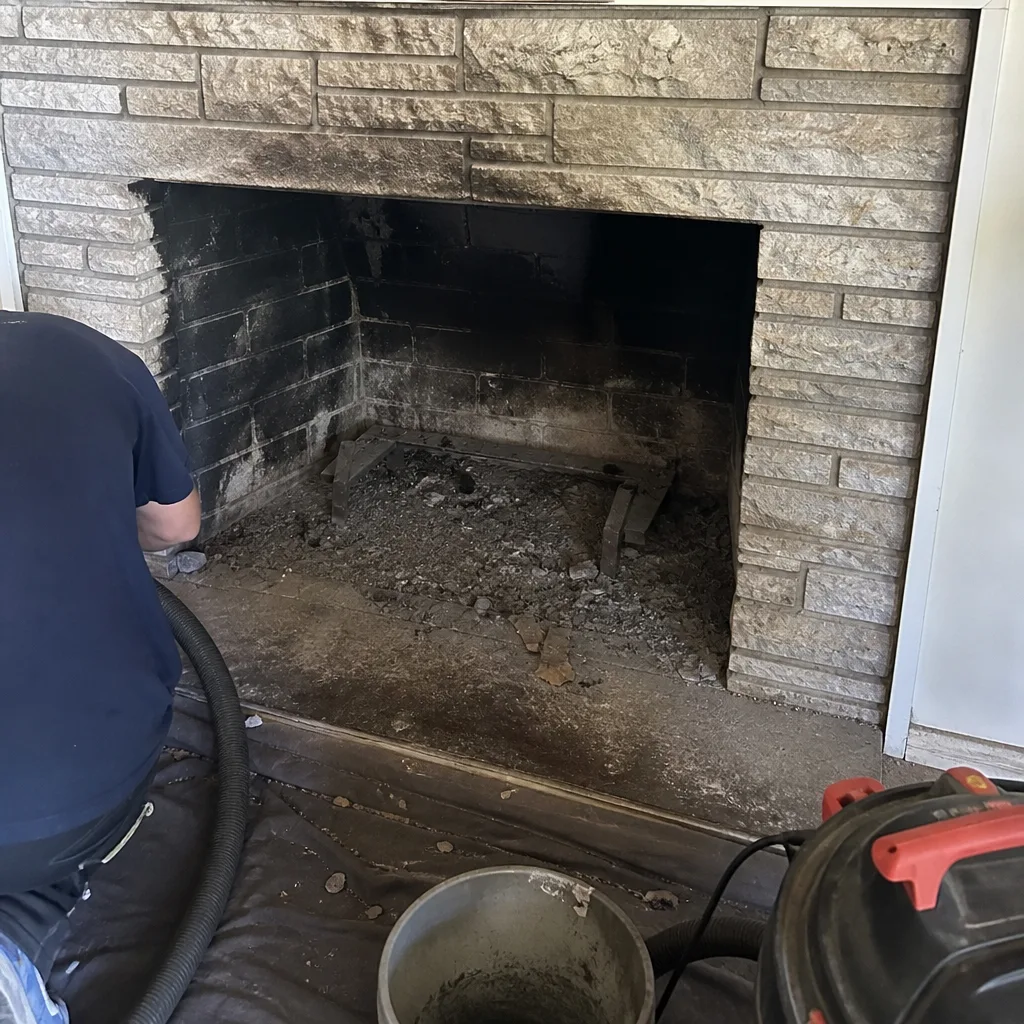
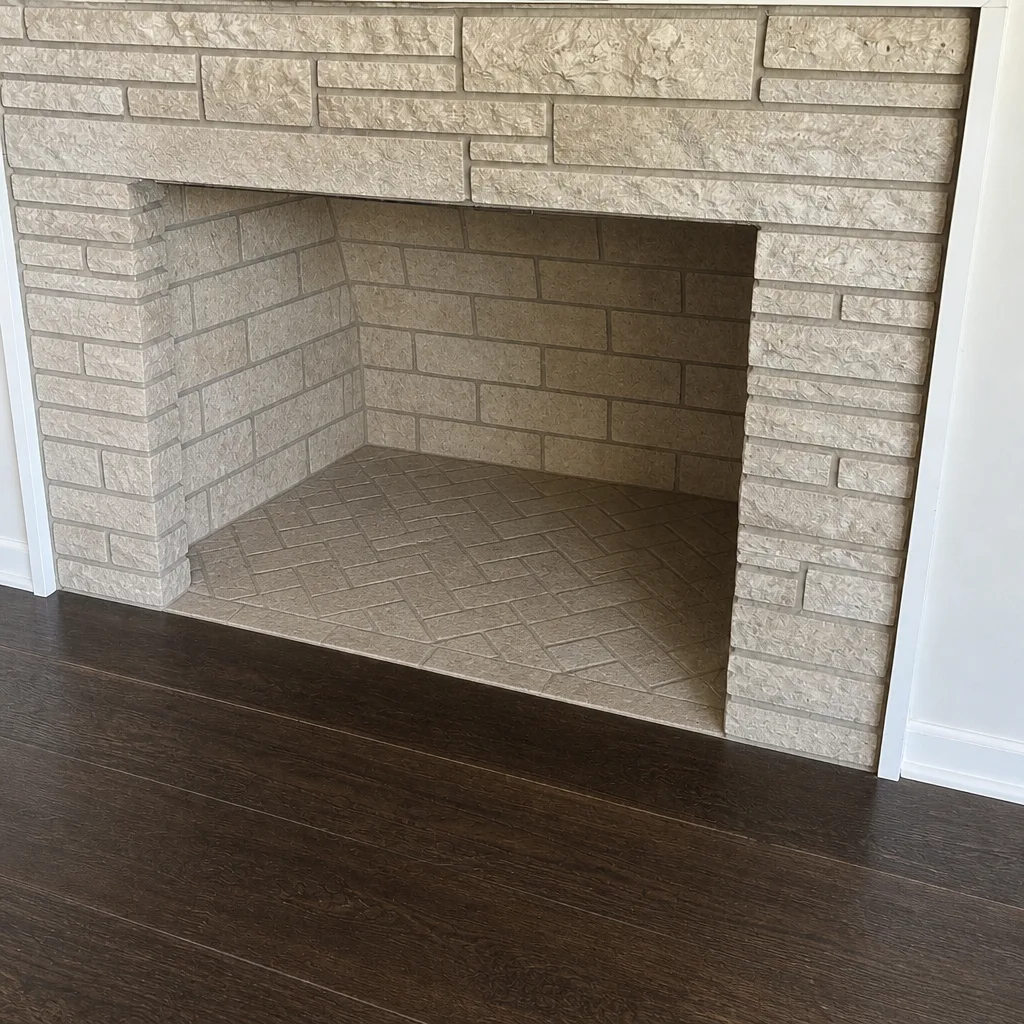
See the difference
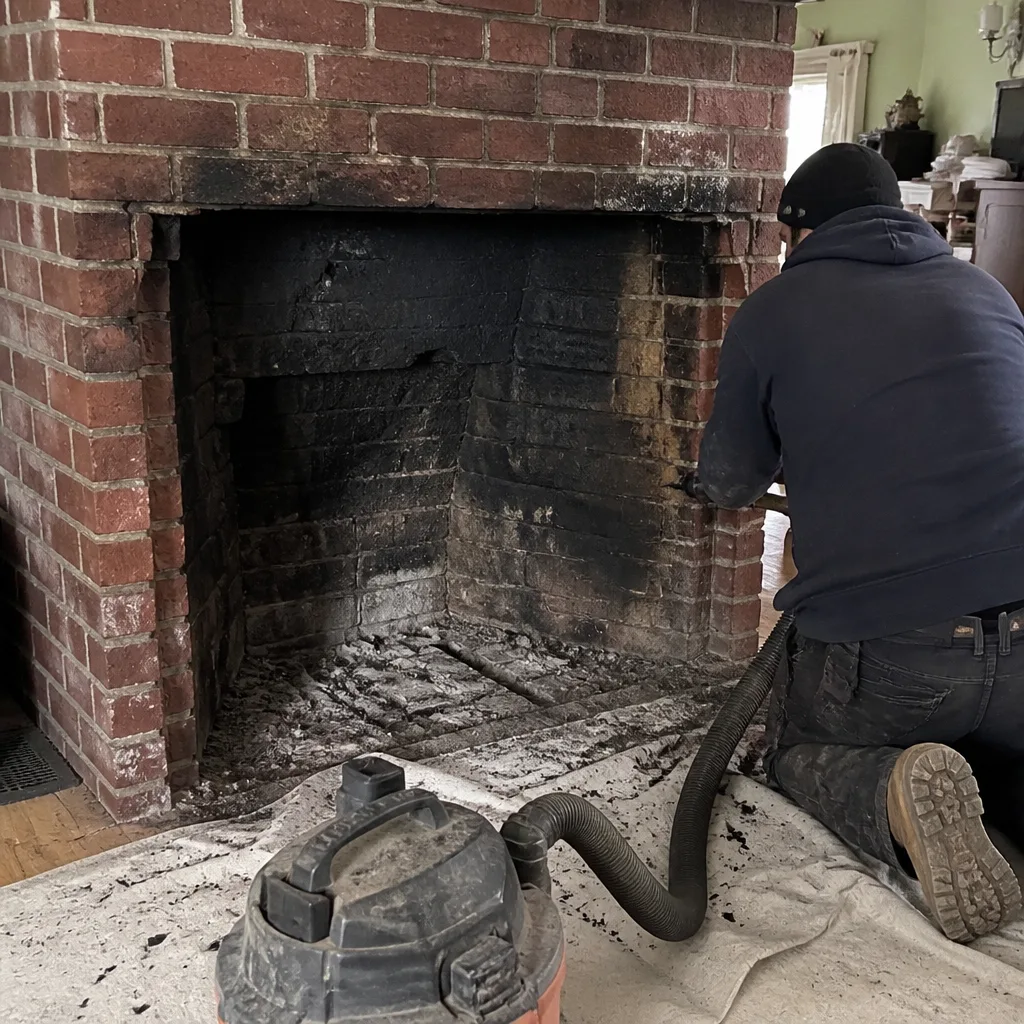 Before
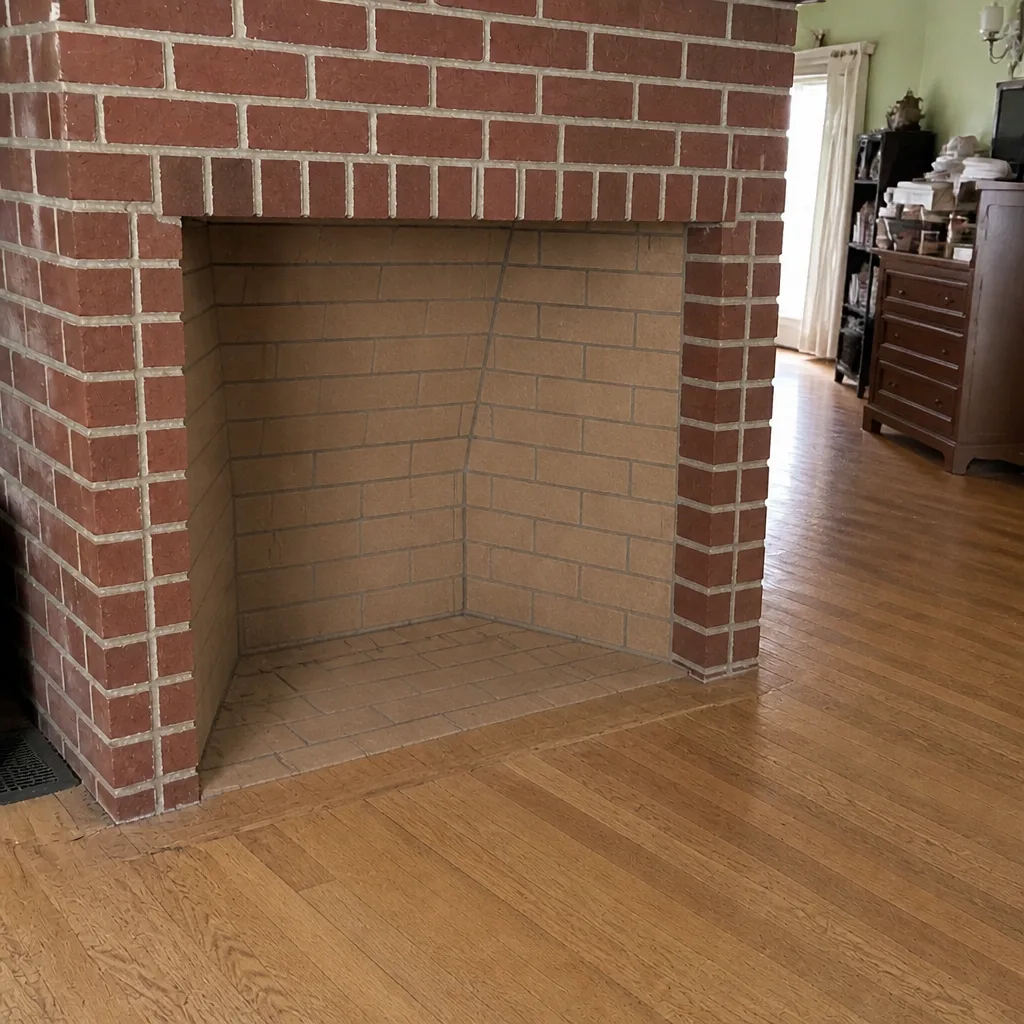 After
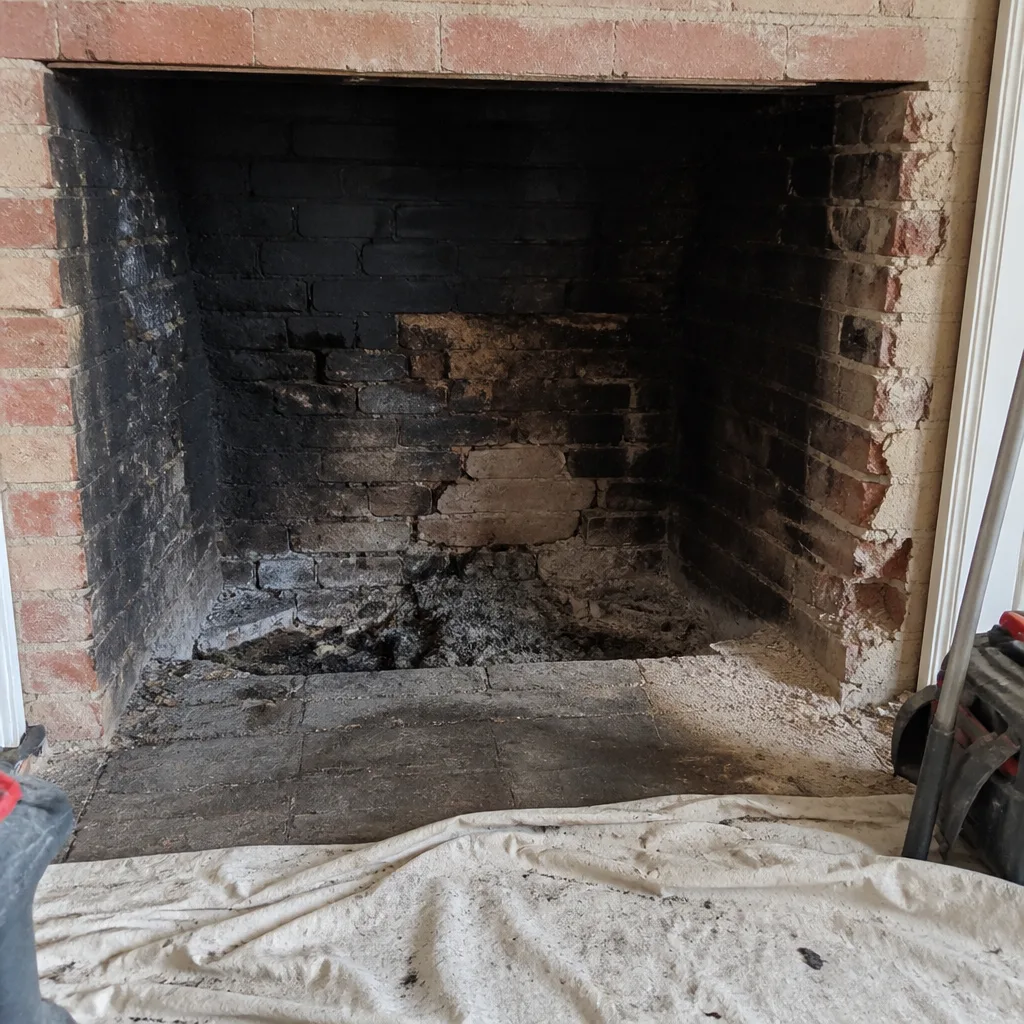 Before
 After
 Before
 After
Frequently Asked Questions
The cost is set per job by a written estimate, agreed before booking, so you know the flat price for the sweep before anyone arrives. Estimates are free, and you’ll know what the work involves before you commit. Call (888) 841-6695 for an exact quote.
You can reasonably maintain surface components yourself – cap checks, damper testing, firebox ash removal – but the flue cleaning and inspection belong with a professional because the judgment call on creosote stage and liner condition is what keeps a chimney safe. Cleaning without the ability to assess what’s left behind is where DIY turns risky. Call (888) 841-6695 and we’ll walk through what your chimney needs.
It depends on how much you burn and how well the fuel is seasoned, but a reasonable baseline is once per burning season for a regularly used fireplace. If you see glazed deposits or the chimney has gone more than a season without a professional visit, book it before the next season starts. Call (888) 841-6695 to schedule an estimate.
Creosote builds up and eventually glazes, and glazed creosote is exactly what feeds a chimney fire. On the other side, a failing liner or cracked crown can allow gases to escape or water to enter. Both are visible on a camera inspection and fixable early, but they don’t fix themselves. Call (888) 841-6695 for a free estimate.
Mayfair’s row houses and older masonry chimneys create access problems – shared walls, narrow rooflines, offset flues inside the wall, and clay liners with their own quirks. These structures make top-down cleaning both physically difficult and a safety concern. The right access equipment and techniques matter more here than on a simple standalone chimney. Call (888) 841-6695 and we’ll tell you what your chimney setup requires.
Not reliably. A professional sweep leaves a documented report of the flue’s condition; a self-cleaning leaves no comparable record, and a claim following a fire or CO incident may be scrutinized on that basis. We’re not your insurer, but documentation is the one thing DIY can’t produce. Call (888) 841-6695 and we’ll put the condition of your chimney on the record.
The Bottom Line
The DIY versus professional chimney cleaning question isn’t about whether you can hold a brush. It’s about whether you can correctly assess what you’re holding it against – the creosote stage, the liner condition, the crown and cap and everything the firebox connects to. Homeowners should keep checking the cap, exercising the damper, clearing the firebox, and seasoning firewood. Those habits genuinely matter, and they’re yours to own. The flue cleaning and the diagnostic work belong with a specialist, especially in Mayfair’s older masonry chimneys where access and structure make DIY harder and riskier. When you’re ready, call (888) 841-6695 for a free estimate. We answer 24/7. Fast dispatch from 7am to 7pm, Sunday through Friday.
Written by the team at Chimney Sweep Mayfair.