
Last updated November 22, 2026
 Sweep & inspection
 Caps & crowns
 Flue relining
 Masonry repair
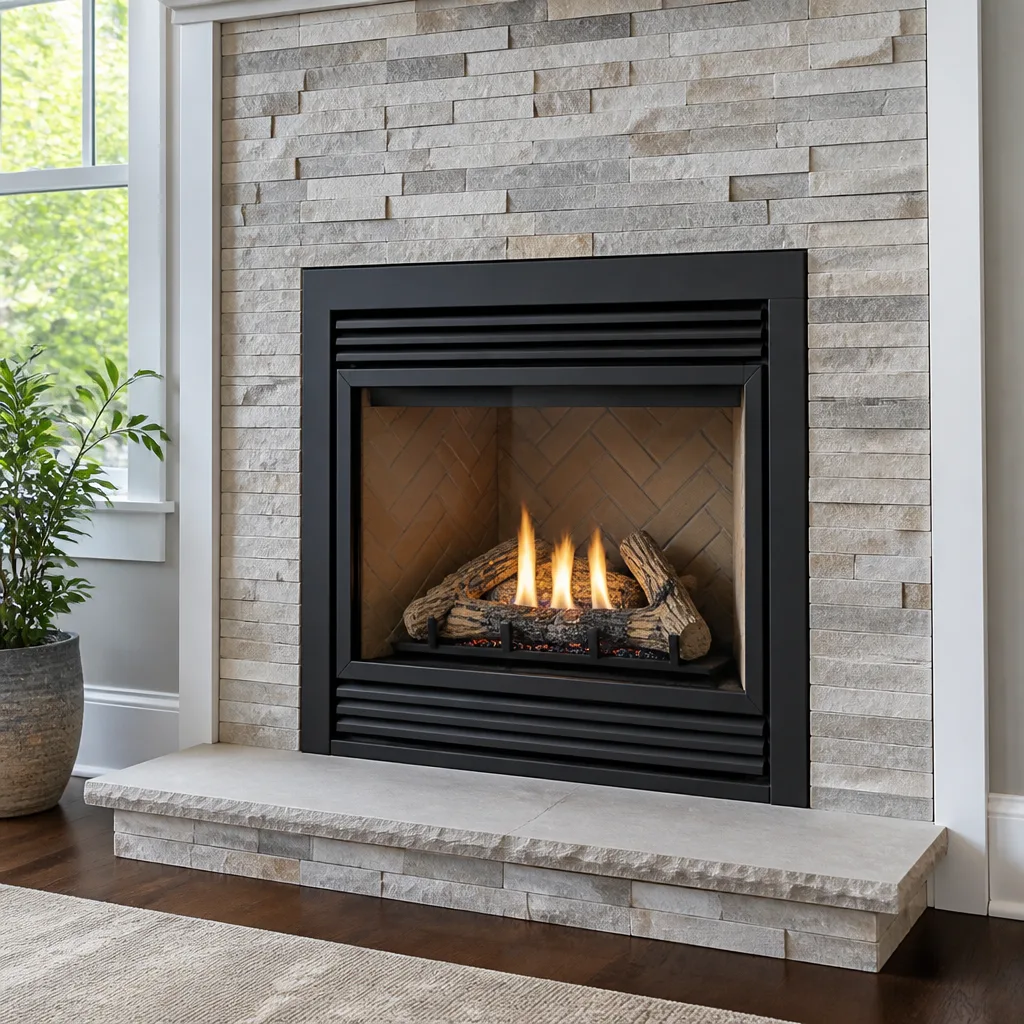 Gas fireplace service
Level 1 sweep and inspection to the NFPA 211 annual standard - flue, crown, cap, and flashing checked and photographed
Chimney sweep logs do not sweep chimneys. They loosen some creosote - which then falls where a brush and vacuum still have to collect it.
The Complete Guide to Chimney Cleaning in Mayfair
A brushed flue and a clean chimney are not the same thing, and the difference is where most house fires actually start. Most people assume that if a sweep runs a brush up the flue, the job is done. But the flue is one zone of a system that includes the firebox, the smoke chamber, the damper, the crown, the cap, and the joints between them. Each one collects its own kind of debris, and each one fails in its own way when it doesn’t get attention. In this guide, we’ll walk you through every component of a chimney in Mayfair, explain what a genuinely thorough cleaning touches and why, and show you what gets missed when a generalist treats the flue as the whole job. By the end, you’ll know exactly what to ask for and what a proper clean should include.
Quick Answer
A complete chimney cleaning in Mayfair goes well beyond brushing the flue. It removes soot and creosote from the firebox, smoke chamber, damper, and flue liner, checks the crown and cap for weather damage, and includes a camera inspection so you can see the condition of the interior for yourself. How often you need one depends less on a calendar and more on how much and what you burn, and on what stage of creosote has built up inside the flue.
Styles & brands we work with
- Sweep & inspection
- Caps & crowns
- Flue relining
- Masonry repair
- Gas fireplace service
Table of Contents
- Why Cleaning the Flue Isn’t Cleaning the Chimney
- The Chimney, Component by Component
- What Mayfair’s Older Housing Stock Means for Your Chimney
- What Rotary Cleaning Equipment Removes That Brushes Cannot
- Level 1, 2, and 3 Inspections: What Each One Covers
- Why Creosote Stage Matters More Than Cleaning Frequency
- What a Full-System Cleaning Actually Involves
- When to Schedule Cleaning in Mayfair
Why Cleaning the Flue Isn’t Cleaning the Chimney
If you’ve ever watched a sweep run a brush up and down a flue in a few minutes, you’ve seen the part of the job that’s visible. What you haven’t seen is everything that happens above and below that flue, and that’s where most problems live.
A chimney is a system. It moves smoke and combustion gases from the firebox up through the smoke chamber, past the damper, into the flue liner, and out the top past the crown and cap. Every one of those zones collects a different kind of deposit, and every one of them can fail independently of the others. A flue can look clean while the smoke chamber above the damper is coated in glazed creosote. A crown can be spalling at the top while the flue below is in perfect order. This is why a general handyman who sweeps on the side can leave a chimney in worse shape than when they started: they clean the one part they know, and the rest of the system goes unexamined.
Mayfair’s housing stock makes this especially important. Much of the borough’s housing was built before 1970, and pre-1970 masonry chimneys were often built with materials and methods that don’t match today’s standards. Many were constructed without a properly sized flue liner, or with clay tile liners that have since cracked or shifted. Others were converted from coal to wood or gas without any adjustment to the flue geometry. When a chimney like this gets a flue-only cleaning, the parts that actually need attention are the ones nobody looked at.
What a full-system cleaning covers instead:
- The firebox floor and walls: where ash, soot, and heat damage accumulate first.
- The smoke chamber: the sloped area above the damper where creosote glazes onto the corbelled masonry.
- The damper: checked for operation and free movement, and cleaned of debris that can jam it open or shut.
- The flue liner: brushed and rotary-cleaned, then camera-inspected for cracks and joint gaps.
- The crown: checked for cracks and spalling that let water into the chimney structure.
- The cap and chase cover: checked for fit, screening, and weather performance.
That’s the full envelope, and it’s the scope we work to on every job. One contractor, one chimney. For the full scope of what we handle, see our Chimney Sweep Mayfair service overview.
The Chimney, Component by Component
Understanding what gets cleaned and why each zone matters on its own is the fastest way to tell a proper job from a quick one. Here’s the breakdown from the bottom up.
The firebox
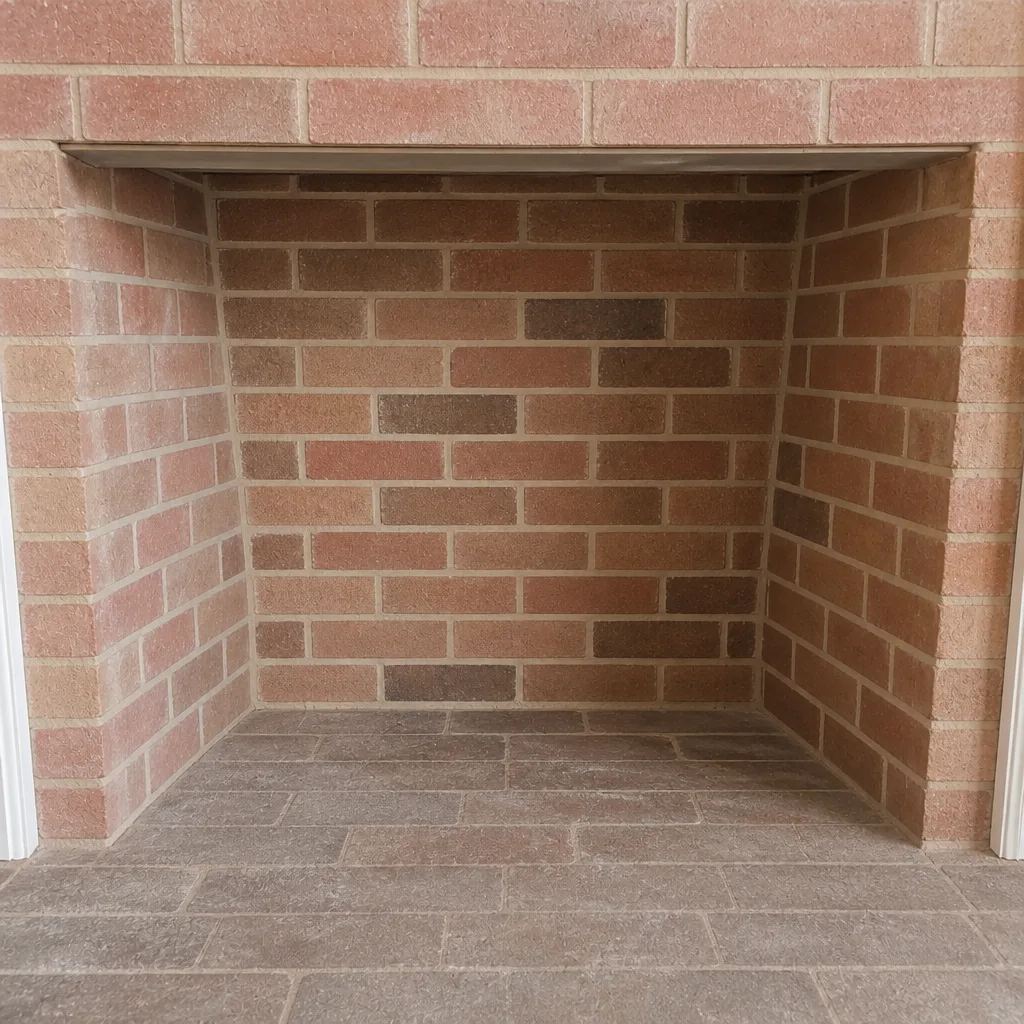
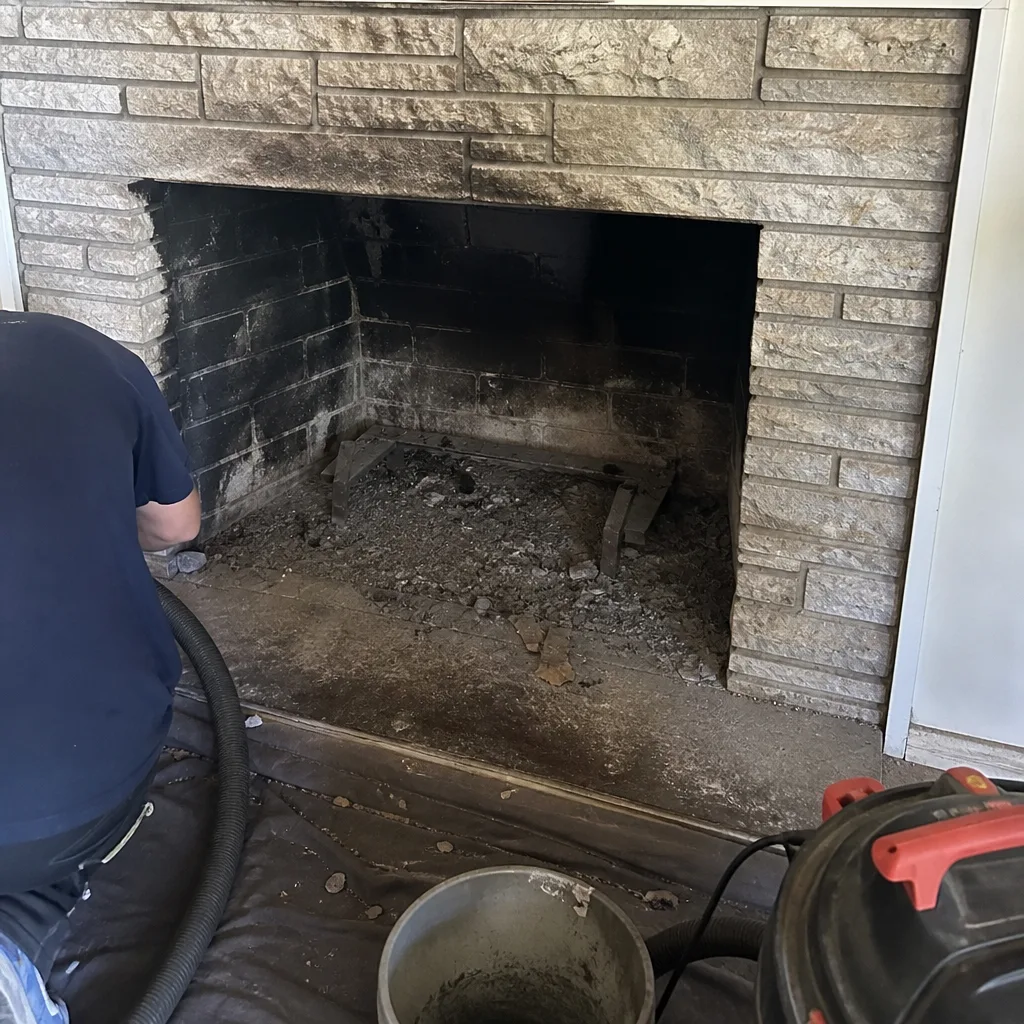
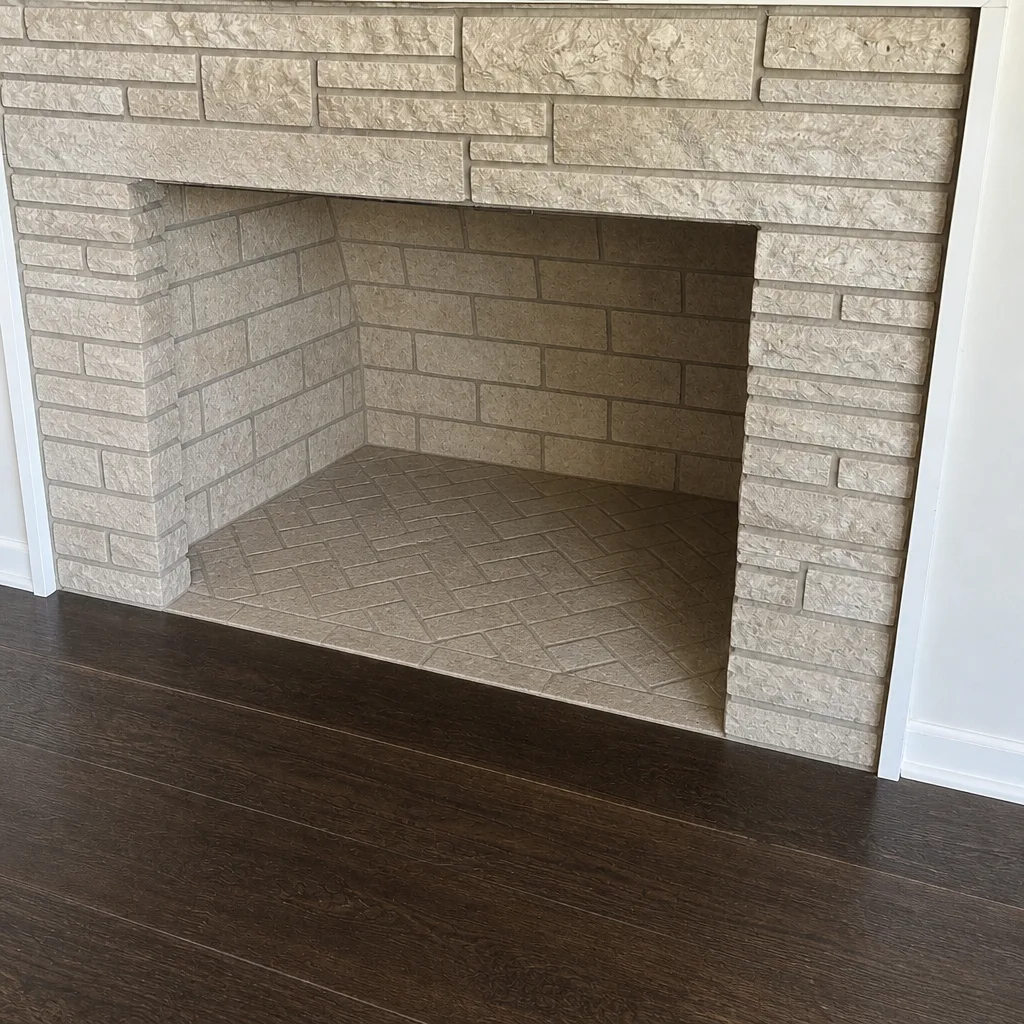
The firebox takes the most direct heat in the entire system. Years of hot fires crack the firebrick, open up mortar joints, and leave the firebox floor pitted and uneven. During a cleaning, the firebox gets swept down to bare masonry and inspected for cracks that can let heat and embers reach framing or hidden combustibles. When the firebox has deteriorated, we can resurface and seal it with the HeatShield restoration system rather than tearing it out, which is one of the reasons we work with that product line.
The damper and smoke shelf
The damper is the metal door that controls draft, and the smoke shelf is the ledge behind it. Both collect debris that brushes often miss. A damper that won’t close properly wastes heat; one that won’t open fully sends smoke into the room. The smoke shelf behind it can trap soot and creosote that later ignites. Cleaning and testing the damper is a distinct step, not a by-product of flue brushing.
The smoke chamber
The smoke chamber is the sloped funnel between the damper and the flue, and in older masonry chimneys it’s often roughly corbelled brick. Those rough surfaces give creosote somewhere to cling and glaze. This zone is regularly skipped by sweeps who clean only the flue, and it’s a common source of chimney fires.
The flue liner
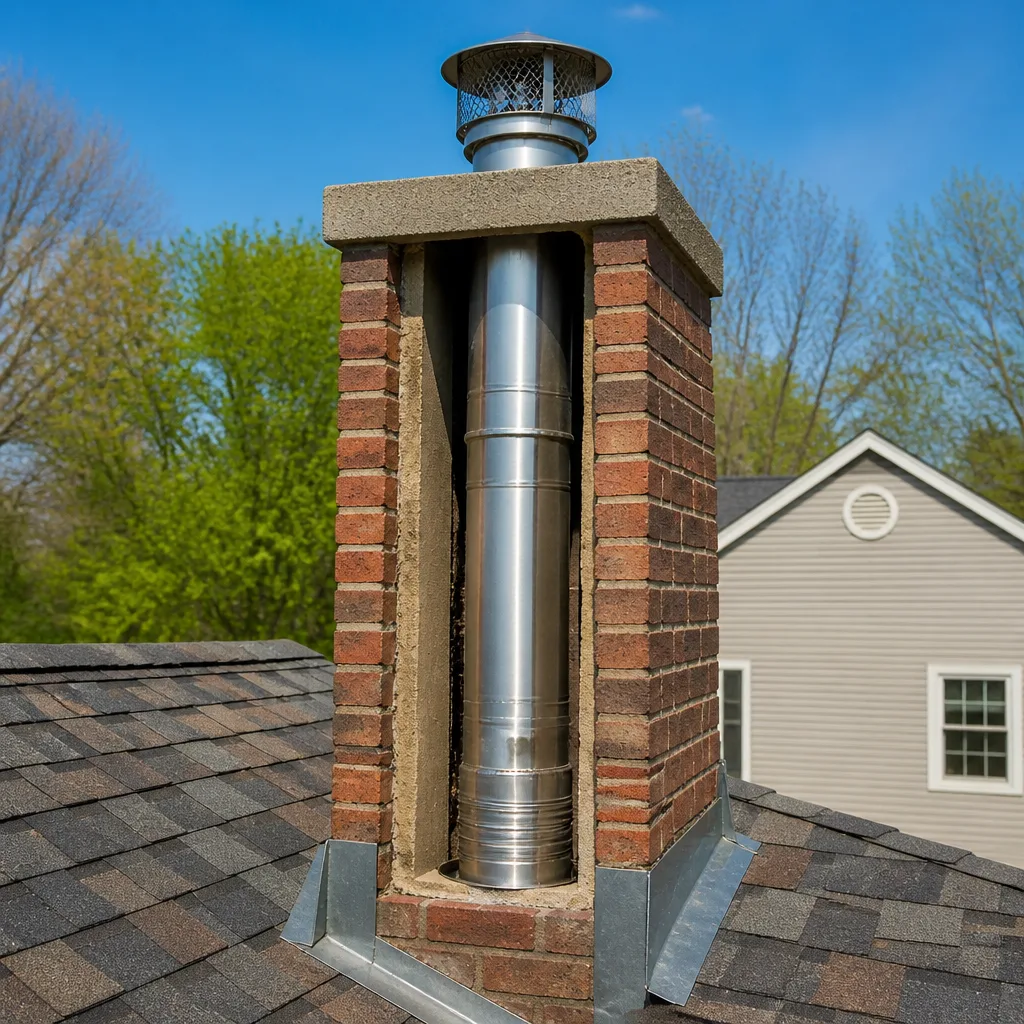
The flue liner carries the smoke and gases out of the house. It’s inspected for cracked tiles, gaps in joints, and gaps between sections. A failed liner lets heat and carbon monoxide reach the surrounding structure, so it’s one of the most important things a cleaning turns up. When a liner needs replacing, we install DuraFlex flexible stainless steel, the liner system professional installers specify for relining.
The crown and cap
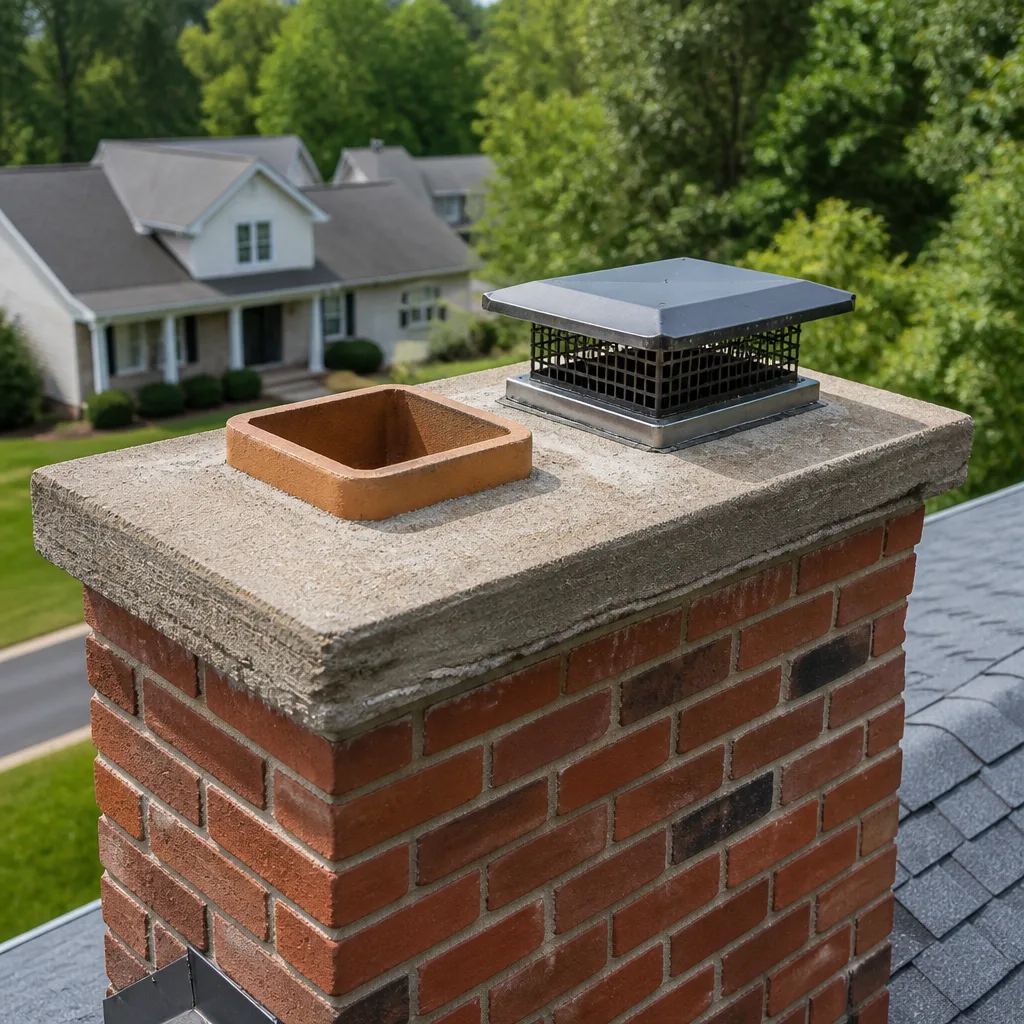
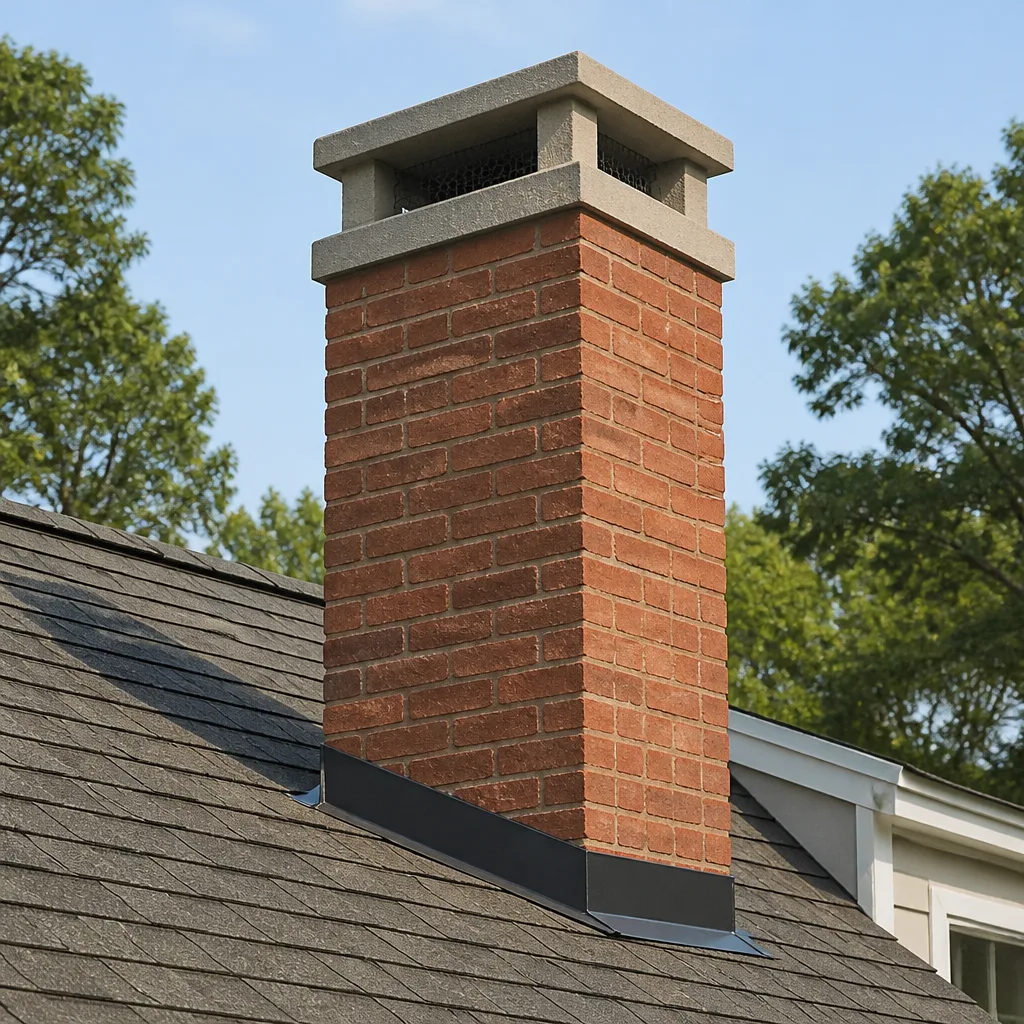
The crown is the concrete or masonry top of the chimney, and the cap sits over the flue. A cracked crown lets water into the masonry, where freeze-thaw cycles in Mayfair’s winters push the cracks wider each season. A missing or damaged cap lets rain, birds, and debris straight into the flue. We specify Gelco and Famco caps for precision fit and weather performance, and we source them through Olympia Chimney and Copperfield because those are the supply chains professional contractors rely on.
Each zone fails in a different way and needs a different fix, which is why chimney cap & crown work is a distinct part of the job from cleaning the flue.
What Mayfair’s Older Housing Stock Means for Your Chimney
Mayfair’s housing was largely built before 1970, and that changes what a cleaning has to deal with. Pre-1970 masonry chimneys were typically built with clay tile flues that were sized for coal, not for modern wood-burning stoves or high-efficiency inserts. When someone converts one of these chimneys to wood without resizing the flue, the flue runs too cool, the smoke lingers, and creosote builds up faster and glazes harder than it would in a correctly sized flue.
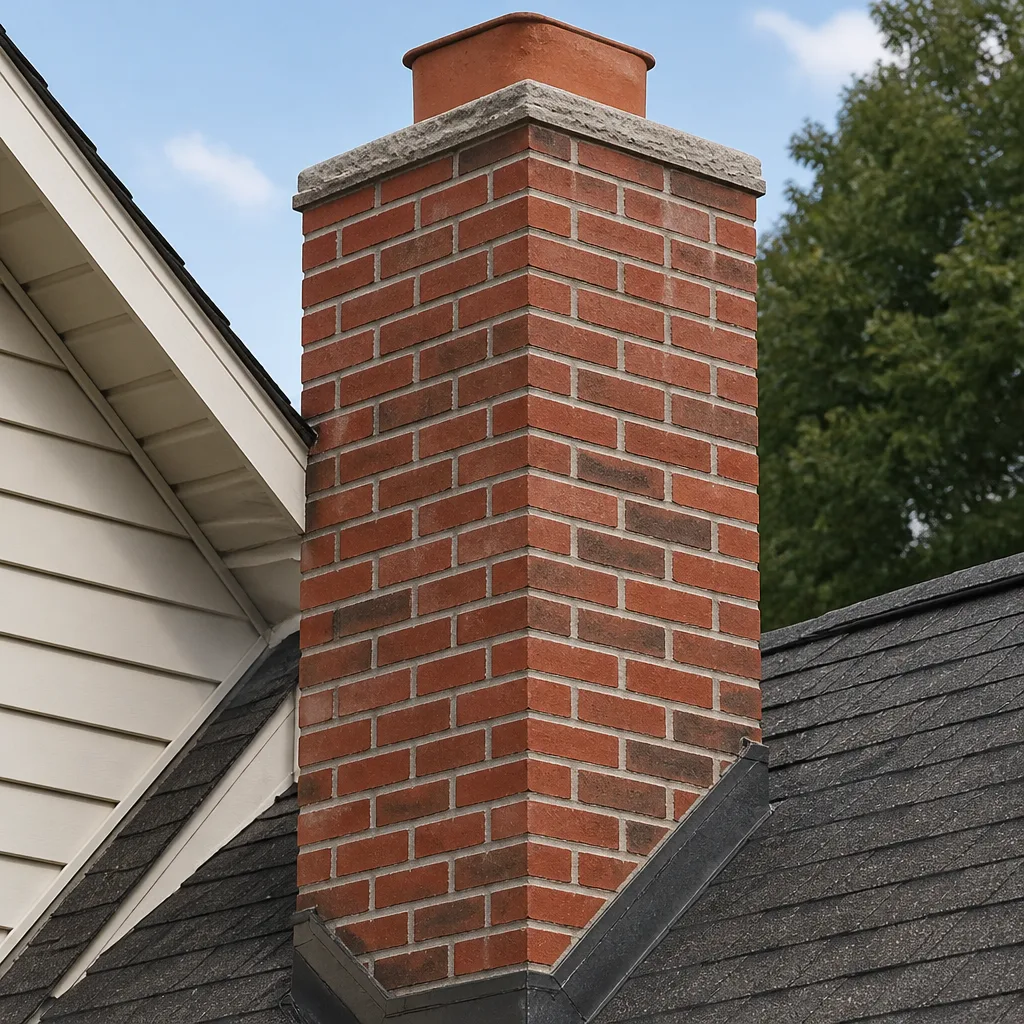
The masonry itself presents its own challenges. Older bricks and mortar in Mayfair take a beating from the freeze-thaw cycle through winter, and chimneys that haven’t been maintained often show spalled brick, crumbling mortar joints, and a cracked crown. Those are structural issues, not cleaning issues, but a proper inspection catches them before they worsen. When water gets into the masonry, it doesn’t stay put; it travels down through the structure and finds the weakest point, which is often the firebox or the ceiling below the chimney.
Newer prefab systems, on the other hand, have their own quirks. They’ve been installed in Mayfair homes for decades, so some are themselves 30, 40 years old now. Their components vary by manufacturer, and generic cleaning methods can damage them if the sweep doesn’t know the system. The liner, the cap, and the firebox on a prefab are all part of a matched assembly, and replacing one with an unmatched part undermines the whole.
What that means for cleaning in Mayfair:
- Pre-1970 masonry chimneys: expect the cleaning to include checking for an original flue liner, examining joint gaps, and looking closely at the smoke chamber.
- Converted chimneys (coal or gas to wood): expect a discussion about flue sizing and possibly a reline, since a mismatched flue is a creosote factory.
- Prefab systems: expect the technician to identify the manufacturer so the right cleaning method is used and any replacement parts match.
- Chimneys that have sat idle: expect the inspection to look for animal nests, cracked tile, and water damage before any cleaning proceeds.
For structural problems that a cleaning surfaces, our chimney repair service covers masonry, crown, and firebox work, so a single visit can address both the cleaning and the repair without another contractor.
What Rotary Cleaning Equipment Removes That Brushes Cannot
Standard wire brushes work well on loose soot and on the first stage of creosote. They’re the tool you reach for when the flue just needs a light clean. What they don’t do is tackle glazed creosote or the hard, shiny deposits that form on the smoke chamber and the liner when a chimney has been burning inefficiently for a while.
Glazed creosote, sometimes called third-stage creosote, is a hard, tar-like coating that bonds to the flue wall. A brush slides over it. Rotary cleaning equipment, which spins a chain or whip head against the flue surface, breaks that glaze down so it can be removed. This is one of the main differences between a routine sweep and a genuine cleaning of a neglected chimney. On a pre-1970 masonry chimney in Mayfair that’s been burning wood for years, rotary cleaning is often the only way to get the flue back to clean masonry.
Rotary cleaning is also safer for the flue itself than aggressive hand-brushing on some systems, because the rotary head follows the flue contour and doesn’t put uneven pressure on cracked tiles. The professional-grade equipment we use is part of why we only work on chimney systems, not on whatever else a handyman’s van has room for. It’s the right tool for the job, and it’s what separates a thorough clean from a quick pass.
The kinds of deposits that need rotary equipment or a chemical treatment:
- Stage 1 creosote: light soot and flaky deposits, removed with a standard brush.
- Stage 2 creosote: a hardened, crunchy layer that brushes can break down but that often needs a second pass.
- Stage 3 creosote: glazed, tar-like coating that a brush slides over and rotary equipment is needed to remove.
- Soot and ash in the smoke chamber: trapped by corbelled brick and rough surfaces, removed with rotary whips.
Level 1, 2, and 3 Inspections: What Each One Covers
Chimney inspections come in three recognized levels, and knowing which one your cleaning should trigger is a big part of understanding what you’re getting for your money.
- Level 1 inspection. This is the standard check that goes with a routine cleaning. It covers the readily accessible parts of the chimney: the firebox, damper, smoke chamber, flue from the bottom, and the exterior from ground level. It’s what you get during an annual sweep when the chimney is in known good condition and nothing has changed.
- Level 2 inspection. This is required any time the conditions of the system have changed: a new appliance, a change in fuel type, a liner replaced, a chimney fire, a property sale, or an earthquake. It includes everything in a Level 1 plus a video camera scan of the entire flue interior and access to parts of the chimney that aren’t normally visible. In Mayfair, with so many pre-1970 chimneys being converted to new appliances, the Level 2 is what shows you what the flue actually looks like inside.
- Level 3 inspection. This goes further, and only happens when a Level 2 reveals a serious problem in a concealed area. It may require removing parts of the chimney or the building structure to access the hidden section. It’s the deepest access level, and it’s triggered by a specific defect, not by routine cleaning.
When does a cleaning trigger an inspection? In our experience, a routine sweep that turns up cracked liner tiles, glazed creosote, or a chimney that’s just changed hands will push the visit toward a Level 2. If the camera scan shows a liner in disrepair, a Level 3 may follow. Knowing this progression lets you ask the right question: which level of inspection am I actually getting, and will I see the camera footage? We include camera inspection and a photo report as part of the work so you have the evidence in front of you.
Why Creosote Stage Matters More Than Cleaning Frequency
The most common advice about chimney cleaning is that you should have it done once a year. That’s a useful baseline, but it’s not the whole picture. A chimney burning well-seasoned hard wood with good draft might not need the same attention as one burning unseasoned wood or one with a flue that’s too large for the appliance. The calendar tells you when to check. What’s actually inside the flue tells you what the cleaning needs to address.
Creosote builds up in three recognizable stages:
- Stage 1: light, flaky soot. This is easy to remove with a standard brush, and it’s the least dangerous form.
- Stage 2: a hardened, crispy layer that clings harder and may need rotary cleaning or a second brush pass.
- Stage 3: glazed, tar-like creosote that bonds to the liner and is the form most closely associated with chimney fires, because it ignites at a lower temperature and burns hot once it does.
What that means for when to schedule: if you’re burning a lot of unseasoned or soft wood, or if the chimney had a fire at some point, or if it’s been years since it was cleaned, the creosote stage is likely to be advanced, and the cleaning needs to be scheduled accordingly. If you’re burning dry hard wood in an efficient appliance with a properly sized flue, the buildup is likely to be lighter, and a routine cleaning may be all you need. Either way, the stage that’s actually in the flue is what determines how thorough the cleaning needs to be, not just the fact that twelve months have gone by. That’s why we inspect before we quote.
What a Full-System Cleaning Actually Involves
Here’s what a full-system cleaning involves, step by step. This is the sequence we work to, and it’s the one to ask about when you’re comparing services.
- Pre-sweep inspection. We look at the chimney top to bottom before any cleaning starts, so we know what we’re dealing with and can flag any structural problems that need to be avoided or handled first.
- Drop cloths and containment. The whole work area is covered before anything is touched, so soot doesn’t leave the chimney.
- Firebox and damper cleaning. Soot and ash from the firebox and smoke shelf are removed, and the damper is cleaned and checked.
- Smoke chamber cleaning. Rotary equipment breaks down creosote on the smoke chamber walls.
- Flue sweeping and rotary cleaning. The flue liner is cleaned, with rotary equipment used where glazed creosote requires it.
- Camera inspection and photo report. The full interior of the flue is scanned on camera, and you see the footage as part of the report.
- Crown, cap, and exterior check. The crown, cap, and flashing are checked for weather damage, cracks, and fit.
Every price is set per job after the estimate, and a written estimate sets the final price. Nothing is recommended without camera evidence you can see for yourself, and when a repair can safely wait, we’ll tell you. We specify Gelco and Famco caps because they fit properly, and DuraFlex when a liner needs replacing, because that’s what professional installers trust, not a big-box substitute. If you want the cleaning and the cap work covered in one visit, our chimney sweep service covers the full envelope.
When to Schedule Cleaning in Mayfair
The best time to schedule a cleaning in Mayfair is before the burning season, not after it. Mayfair’s winters are cold enough that most fireplaces see heavy use from late fall through early spring. If you wait until the first cold snap to think about the chimney, you may be calling when the schedule is full. Scheduling in the shoulder season gives you answers ahead of time and lets you plan any repair work well in advance.
Beyond the calendar, the signals that a cleaning is due are specific:
- The fire smokes back into the room when it’s first lit, or the draft feels weak.
- You smell a strong, acrid odor from the fireplace, especially on damp days.
- There’s soot visible on the firebox surround or the wall above it.
- You’ve burned unseasoned wood, or a lot of it, since the last clean.
- The chimney hasn’t been cleaned in over a year or you don’t know when it was last done.
- You’re preparing to sell the house and need a clean chimney with documentation.
If you recognize more than one of those, book an inspection with the cleaning. It’s the cheapest way to know what your flue actually looks like and avoid a surprise later.
Common Mistakes to Avoid
- Trusting a flue-only sweep. Brushing the flue leaves the smoke chamber, firebox, damper, and crown unexamined. Ask for full-system scope in writing.
- Skipping the camera inspection. Without a camera scan, nobody can see the inside of the flue. Ask for the footage; you should be able to see the condition of the liner for yourself.
- Assuming yearly is always enough. A chimney burning unseasoned wood can build glazed creosote in less than a year, while a well-maintained one burning dry hard wood may go longer. The creosote stage matters more than the calendar.
- Ignoring the crown and cap. A cracked crown and a missing cap let water in, and in Mayfair’s freeze-thaw winters that water widens the cracks each season. Inspect them during every cleaning.
- Hiring a generalist. A handyman who sweeps as a side service doesn’t have rotary equipment, doesn’t know the flue sizes for a pre-1970 Mayfair chimney, and can’t address a failed liner. Use a specialty chimney contractor who can cover the entire system.
- Letting a stage 3 creosote situation sit. Glazed creosote ignites at lower temperatures and burns hot. If your flue is coated in it, schedule the cleaning and treatment.
- Using generic replacement parts. Off-the-shelf caps and unmatched liner pieces fail at the fit. Specified parts from Gelco, Famco, DuraFlex, Olympia Chimney, or Copperfield fit the flue they’re specified for.
See the difference
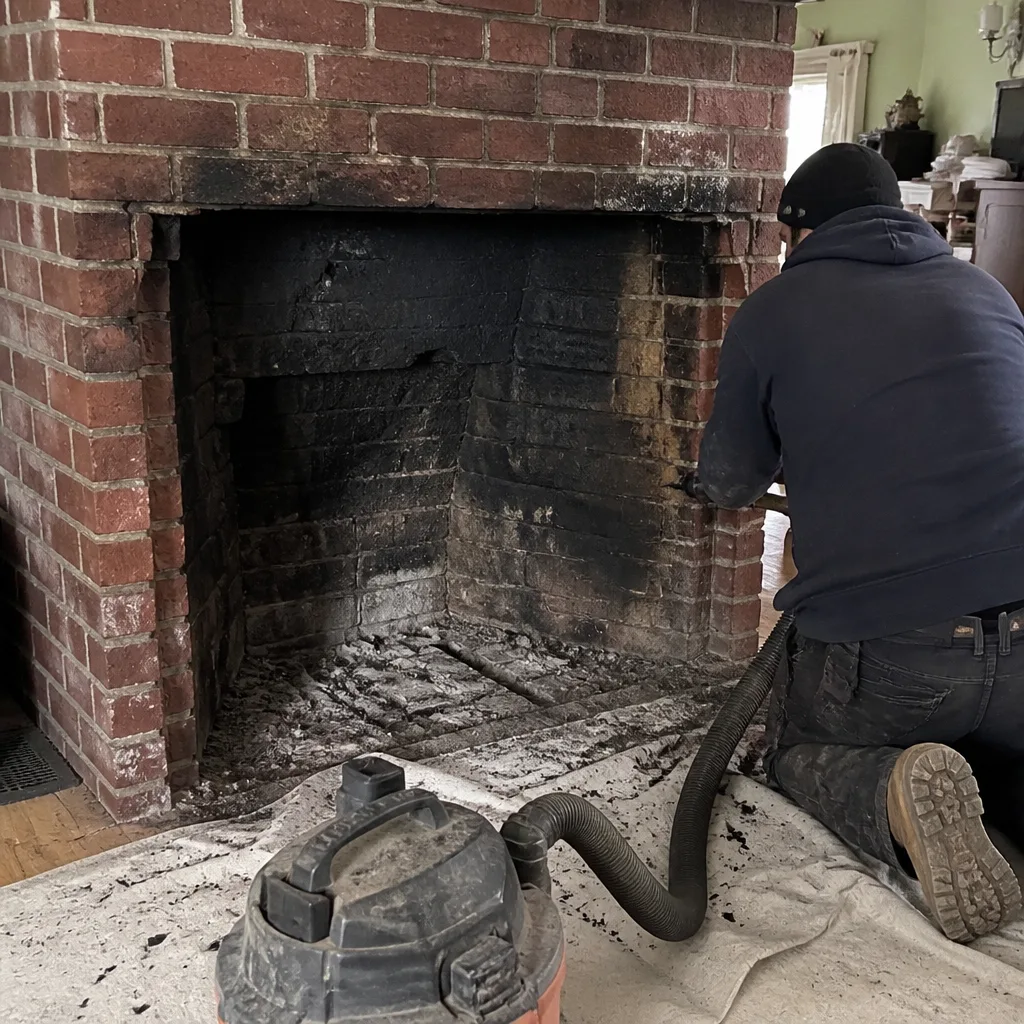 Before
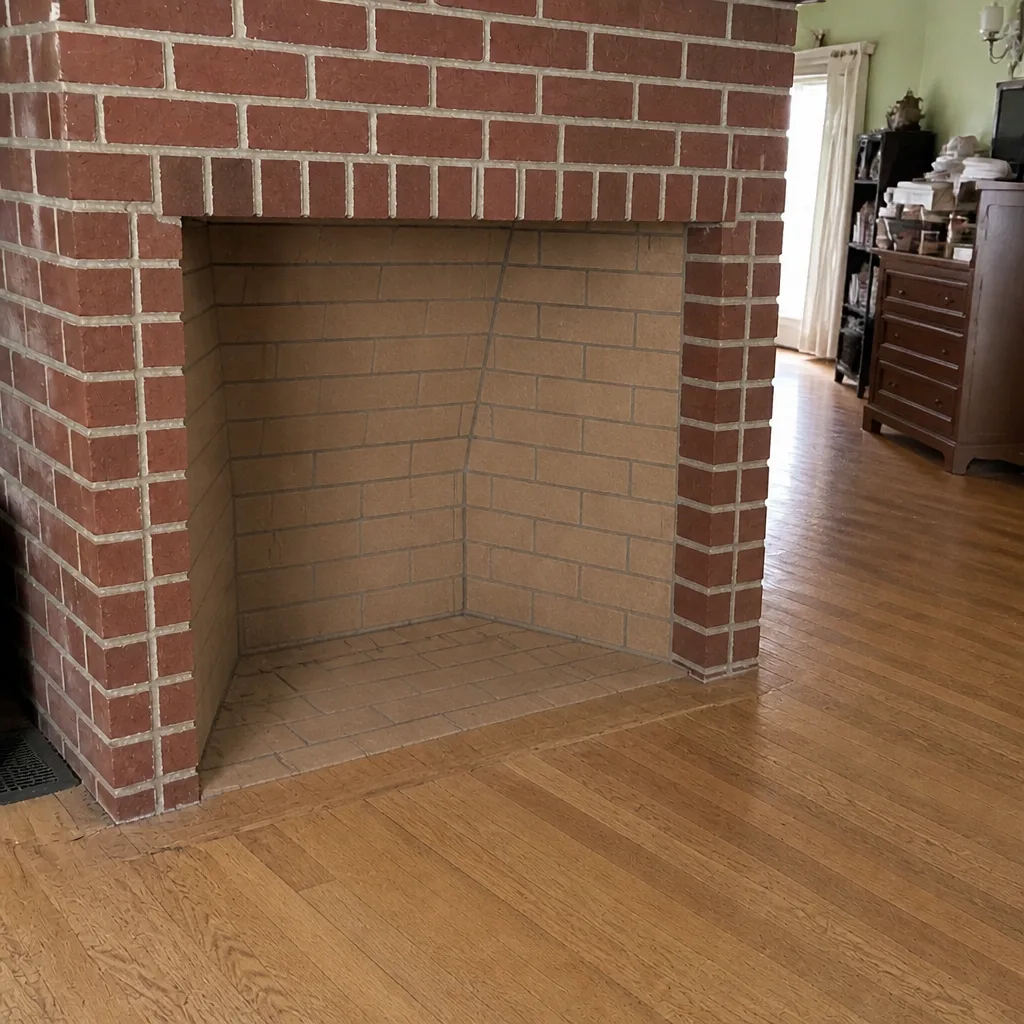 After
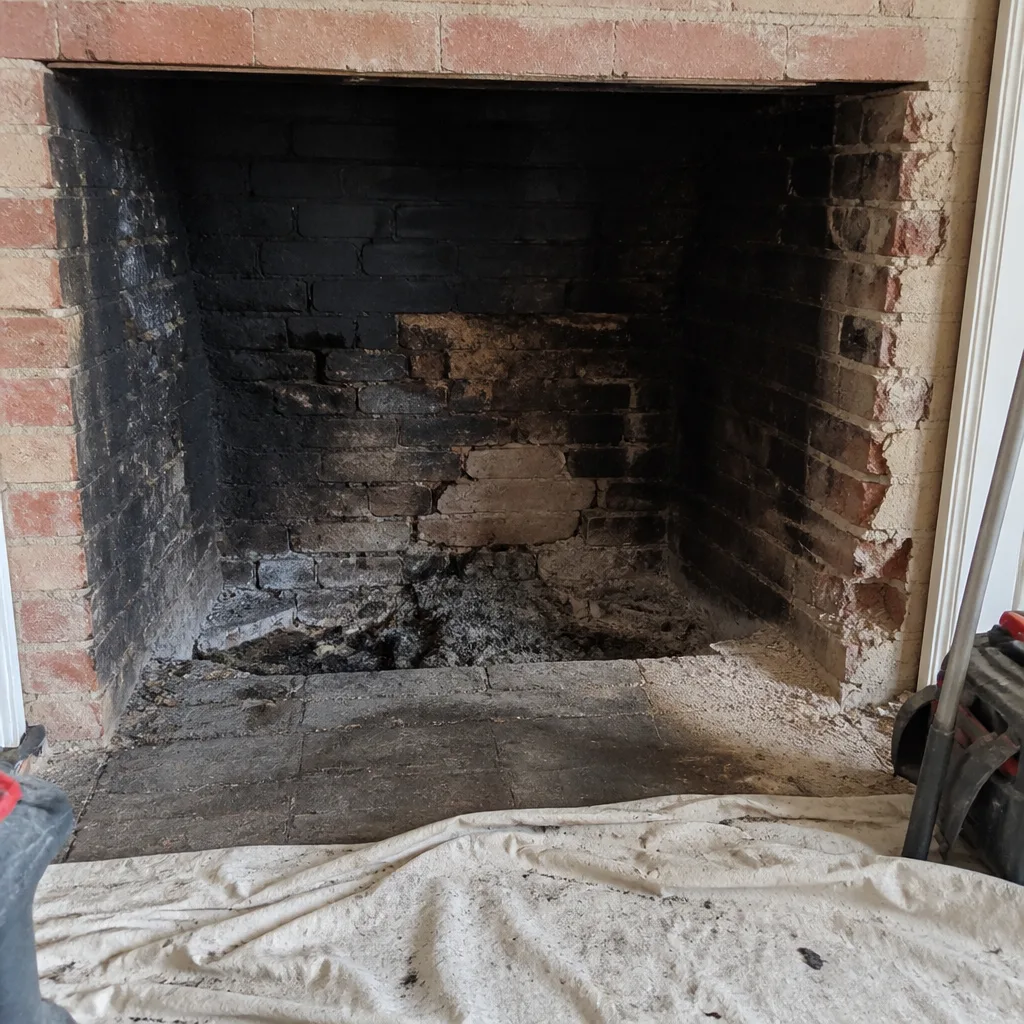 Before
 After
 Before
 After
When to Call a Professional
Call a professional when any of the following is true: you’ve never had the chimney cleaned or don’t know when it was; you’ve had a chimney fire or suspect one; the fireplace smokes back, drafts poorly, or smells strongly even when not in use, because that odor can indicate a buildup or a failed liner; you’re converting to a new appliance or changing fuel; you’re preparing to sell; or the visible chimney top shows a cracked crown, a missing cap, or loose masonry. Carbon monoxide is a genuine hazard when a liner has failed, and a professional inspection is the only reliable way to know whether yours has.
Our technicians have up to 9 years of experience working on chimney systems in Mayfair. The independent local professionals we connect you with are licensed and insured as their state requires. Call chimney repair if the cleaning reveals a problem. Chimney Sweep Mayfair offers free estimates in Mayfair: call (888) 841-6695. We answer 24/7. Fast dispatch from 7am to 7pm, Sunday through Friday.
Frequently Asked Questions
Most homes benefit from an annual cleaning and inspection before burning season, but the honest answer depends on what’s in your flue. A chimney burning dry hard wood in a correctly sized liner may hold up well across the year, while one burning unseasoned wood, or a pre-1970 Mayfair chimney that’s been converted to wood without resizing, can build glazed creosote in less time. The creosote stage in the flue tells you more than the calendar does. Call (888) 841-6695 for a free estimate on where your chimney stands.
A Level 1 is the standard inspection that goes with routine cleaning and covers the readily accessible parts of the chimney. A Level 2 adds a video camera scan of the entire flue and is required when conditions change, including a new appliance or a property sale. A Level 3 is a deeper inspection that only happens when a Level 2 reveals a serious concealed defect. In practice, a cleaning in Mayfair’s older housing often turns up issues that push the visit toward a Level 2. Call (888) 841-6695 for a free estimate that includes the right inspection level.
Only if the camera inspection shows a liner that’s cracked, gapped at the joints, or missing. A flue-only sweep can’t tell you that, which is why we include camera footage in the work. When a liner does need replacing, we install DuraFlex flexible stainless steel, the liner system professional installers specify. If it doesn’t need replacing, we’ll say so; nothing is recommended without evidence you can see. Call (888) 841-6695 for a free estimate.
Creosote builds up on the flue walls and smoke chamber, and glazed creosote ignites at lower temperatures than most people expect. A chimney fire is the worst outcome, but there are others: a cracked liner can let carbon monoxide and heat reach the surrounding structure, and a damaged crown lets water in to widen its cracks through Mayfair’s freeze-thaw winters. An inspection is the only way to know the real condition. Call (888) 841-6695 for a free estimate.
Yes. A neglected chimney is exactly what rotary cleaning equipment is built for; a standard brush slides over glazed creosote, but the rotary heads break it down. The first step is an inspection so we know what we’re dealing with and can flag structural problems before cleaning starts. Call (888) 841-6695 for a free estimate.
The price is set per job after the estimate, so it reflects the actual condition of the chimney and what the cleaning needs to address. A flue-only sweep and a full-system cleaning with camera inspection are different jobs, and the estimate reflects the difference. The written estimate sets the final price. Call (888) 841-6695 for a free estimate.
The Bottom Line
A clean chimney is the whole system, from the firebox floor to the cap crown, not just the flue. Mayfair’s older masonry housing makes that more important: pre-1970 chimneys are prone to unlined or damaged flues, corbelled smoke chambers that trap glazed creosote, and crowns that take a beating from freeze-thaw winters. The creosote stage in your flue determines how thorough the cleaning needs to be, which is why we inspect before we quote. When you hire a specialty chimney contractor, ask about scope, camera inspection, and inspection level. Call (888) 841-6695 for a free estimate. We answer 24/7.
Written by the team at Chimney Sweep Mayfair.